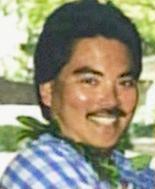
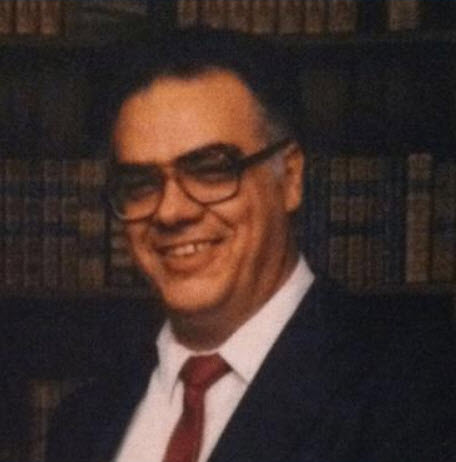
Taxi driver Hahn Soo Kim, a 41-year-old male of Korean descent living in Honolulu, spent his days and nights working long shifts to support the family he had built in the Salt Lake neighborhood after emigrating from Seoul in the mid-1980s. He drove for SIDA Taxi, navigating the island's airports, hotels, and neighborhoods, known among fellow drivers as a quiet worker and at home as the father of two young sons.
Within Honolulu's Korean community he was part of a small but close-knit circle, and representatives of the Korean consulate would later describe how deeply his death shook that community. 
On the night that bridged September 1 and 2, 1999, Kim was working a late shift in his brown 1984 Buick station wagon cab, marked with SIDA identifiers. Shortly after 1 a.m., dispatch records show him checking in about a pickup at Honolulu Airport, a routine fare that suggested nothing out of the ordinary. Around 1:30 a.m., he was seen dropping off a passenger outside a hotel in Waikiki. Investigators later pieced together that he may have accepted another fare in the Waikiki area afterward, one he did not report over the radio, something that was not unusual for a driver hoping to quickly secure one more paying ride. SIDA's operating practices included not taking spontaneous pickups in Kailua unless a specific call came in from that side of the island, leading investigators to believe that whoever climbed into Kim's cab after Waikiki directed him across the mountains to Kailua Beach Park. 
What happened during that drive across the Pali remains unknown. In the early morning darkness, at about 2:52 a.m. on September 2, police and emergency responders were called to the parking lot of Kailua Beach Park. There they found Kim's station wagon pulled up in front of the beach pavilion. The engine was still running, the lights and taxi dome illuminated as if his shift had simply paused for a moment. Kim was still in the driver's seat, slumped over, with a gunshot wound to his head that left no doubt this was a homicide. The medical examiner's office later confirmed that he had died from the gunshot, transforming an unexplained scene in a quiet beachfront park into one of the year's most chilling murders. 
Detectives immediately began working backward from that silent tableau. They traced Kim's last confirmed movements through dispatch logs and witness accounts, focusing on the period between 1:30 and 3 a.m., and appealed to anyone who might have seen his distinctive cab between Waikiki and Kailua during that window. Investigators publicly stated that robbery appeared to be the likely motive, but the details complicated that theory: by early 2000, police were noting that although they suspected a robbery attempt, no money had actually been taken from Kim. Even more troubling for the investigation, there was no usable description of any suspect at all. In a review of Oahu's 1999 homicides published several months after the killing, Kim's case was listed among a handful of unsolved murders, and under his name the entry for “suspect description” was stark: none. 
The impact of the murder rippled outward almost immediately. Within days, Honolulu newspapers reported that cab companies across Oahu were warning their drivers to be more cautious, particularly on late-night calls, and some companies began exploring or implementing new safety measures in response to Kim's death. In the Korean community, leaders spoke openly of disbelief and anger, describing the killing of a hardworking immigrant father as something that felt alien to their experience of life in Hawaiʻi. The Korean consulate stepped in to assist Kim's family, who now had to navigate both grief and the practical realities of life without the man who had been their primary provider. His funeral notices described a husband, father, and son remembered not for the way he died, but for the life he had built since arriving on the island years earlier. 
As the year turned, Kim's murder remained unsolved even as overall homicide numbers on Oahu drew concern from prosecutors and the public. In a detailed survey of the previous year's killings, police singled out Kim's case as one in which public assistance was crucial, emphasizing that without witnesses or solid tips, the person or people responsible might never be identified. The Honolulu Police Department later formalized the case on its cold case roster, summarizing the basic facts of the shooting and repeatedly urging anyone with information to contact detectives or CrimeStoppers. That listing, still active decades later, underscores what the available record shows: there have been no publicly reported arrests, no identified suspects, and no trials or convictions connected to the killing of Hahn Soo Kim. His death remains an open, unsolved homicide, preserved in official files and community memory as the night a working cab driver's routine shift ended in a lonely parking lot with questions that have yet to be answered.