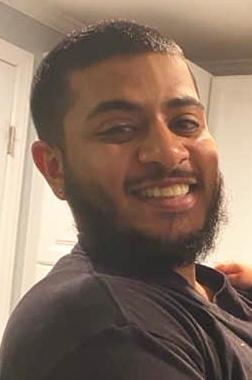
On a quiet Sunday morning in late September 2024, Marco Antonio Velazquez was a 24-year-old Hispanic man who never made it home from a gathering in Boiling Springs, South Carolina. What began as a planned confrontation between people who already knew one another ended with gunfire, sirens and a neighborhood on Thorn Ridge Drive sealed off by deputies.
By the time the Spartanburg County coroner arrived, Marco lay dead at the scene, his name later listed in public records and on an online memorial as one more life lost to gun violence in the small community just outside Spartanburg.
Deputies from the Spartanburg County Sheriff’s Office were dispatched around 10:30–10:45 a.m. on Sunday, September 22, 2024, after reports of a shooting near 946 Thorn Ridge Drive in Boiling Springs. When they arrived, they found four people who had been caught up in the violence: one person already dead, later identified as Marco; two others suffering from gunshot wounds; and a fourth person who had been shot at but not hit. The wounded were rushed to a hospital, while the uninjured participant was taken to the sheriff’s office for questioning. Marco was pronounced dead at the scene, and the coroner’s office publicly confirmed his identity and age the following day, listing his residence as Overhill Circle in Spartanburg.
As investigators began piecing together what had happened, a picture emerged of a confrontation that was not random. Authorities said everyone involved knew each other and had agreed to meet at the home on Thorn Ridge Drive for a fight. What might once have been some kind of fistfight or street dispute instead escalated into a coordinated ambush: the sheriff’s office later described the incident as gang related, noting that law enforcement had prior dealings with all of the people involved. Detectives said the group arrived expecting a confrontation, but they walked into a situation already shaped by fear, grudges and the presence of an assault rifle.
According to investigators, the man they identified as the shooter was 22-year-old A.B. “AB” Martinez, who lived across the street from the house where the confrontation had been arranged. Martinez allegedly told authorities that he took an assault rifle and went to a spot across from his home to wait for Marco and the others to arrive. When they did, he opened fire, sending rounds into the vehicle and the people who had come prepared for a fight but not for an assault-weapon ambush. Local television reports stated that he was arrested shortly after the shooting and charged with murder as well as multiple other counts, including attempted murder tied to the surviving victims. Jail booking records from that same day show Martinez being booked into the Spartanburg County system on an attempted murder charge, reflecting at least part of the slate of accusations against him.
The formal case against Martinez continued to grow more complex over time. Public jail and mugshot databases list him as a white male, five feet eight inches tall and weighing about 130 pounds, and confirm that he was 22 at the time of his first booking in connection with the September 22 shooting. More than a year later, in October 2025, he appeared again in county booking logs, this time arrested and booked on a home-detention violation, suggesting that he had been under court-ordered monitoring—likely as part of the ongoing proceedings in his violent-crime case—and had allegedly broken the conditions of that release. As of the latest publicly available records and news reports located in this search, authorities continue to describe him as facing charges that include murder and attempted murder for the shooting that took Marco’s life, with no widely reported account yet of a completed trial or final conviction.
For Marco, the official paperwork is brief: a coroner’s notice naming him as the victim, a memorial entry recording the date and place where he was killed, and news stories that summarize his death in a few compact lines. Yet those sparse records trace the outline of a story that is anything but abstract. On that late-September morning, a dispute that might once have ended with harsh words or bruised pride instead drew in an assault rifle, gang tensions, and a young neighbor willing to wait with a gun for people he already knew. The result was a dead man on a suburban road, two others wounded, one shaken survivor, and a community forced to reckon with the way a planned fight transformed into a killing that still ripples through court dockets and grief long after the crime scene tape came down.