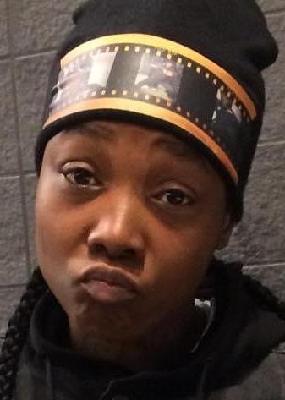
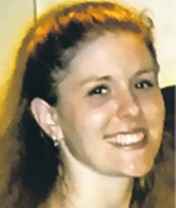
In the early hours of March 15, 2024, a tragic event unfolded in Baltimore that cut short the life of 35-year-old Lenora Alston, a Black female. Just after 2:00 a.m., she had arranged to meet a man known by the nickname 'Ratchet' outside her mother's home in the 1000 block of Fulton Avenue. Surveillance footage captured Alston entering a white Chevrolet Malibu, the vehicle belonging to the man she was meeting.
A struggle ensued inside the car, and as Alston attempted to exit, she was shot multiple times. Responding to reports of gunfire at approximately 2:17 a.m., police discovered Alston suffering from gunshot wounds. She was rushed to a local hospital, where she tragically succumbed to her injuries. The investigation revealed she had been shot six times, including a close-range shot to her face.
Investigators delved into Alston's phone records, which led them to identify 'Ratchet' as 30-year-old Reginald Peay. Authorities tracked Peay's cellphone and located him later that same day. Upon their approach, Peay attempted to flee, discarding a firearm onto a rooftop. While this particular weapon was not the one used in Alston's murder, officers found the keys to the white Chevy Malibu in his possession. Peay was initially taken into custody on a handgun violation. On March 21, 2024, he was formally charged with the first-degree murder of Lenora Alston, in addition to other firearm-related offenses.
During court proceedings, a complex and conflicting narrative emerged. Prosecutors argued that Peay had 'gunned down brutally and senselessly' a woman who trusted him enough to meet him outside her mother's residence. They presented evidence that Alston was the legal owner of a handgun, for which she had a concealed carry permit for her job in security. The prosecution contended that Peay used Alston's own gun to kill her before speeding away from the scene. Peay's defense attorney countered with a claim of self-defense, stating that Peay only fired after Alston introduced the weapon into the situation. Peay himself testified that he barely knew Alston, and that he felt threatened, leading him to take the gun from her and shoot her in self-defense.
Ultimately, a jury found Reginald Peay guilty of first-degree murder, firearm use in a felony or violent crime, firearm possession with a prior felony conviction, and stealing a pistol. In February 2025, a judge sentenced him to life in prison plus an additional 20 years. He will be required to serve the first five years of his sentence without the possibility of parole. During the sentencing hearing, Alston's mother expressed the profound and irreparable loss her daughter's death had caused, describing it as a 'spiritual and physical hole that could not be filled.'