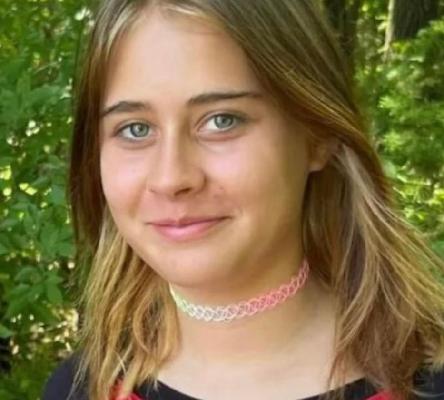
On a late April weekend in 2023, 13-year-old Tiffany Dore Guess, a female student from Henryetta, Oklahoma, joined friends for what was supposed to be an ordinary sleepover at her family’s rural home east of town. Tiffany lived there with her mother, Holly Guess, and her older siblings, Rylee Allen and Michael Mayo. She was a seventh-grader who ran cross-country, sang in the school choir and had just tried out for the cheerleading squad, the kind of busy, hopeful schedule that made her
grandmother proudly drive two hours on April 27 to watch Tiffany sing in her final choir concert of the year. That weekend, Tiffany invited two close friends, Ivy Webster and Brittany Brewer, to stay over, and the three teens spent their time at the house and on the surrounding property, unaware that the man they knew as their stepfather or friend’s stepfather, Jesse McFadden, sat at the center of a much darker story.
McFadden, who had married Holly the previous year, was a convicted rapist and registered sex offender. He had been sentenced to 20 years in prison for first-degree rape in 2003 but was released in 2020 after serving roughly 16–17 years, and while still incarcerated he had been charged in 2017 with using a contraband phone to solicit sexual conduct from a minor and exchange explicit images. The trial for those new charges was scheduled to begin on May 1, 2023, and as that date approached, his behavior turned ominous: investigators later learned that he sent an unsettling message to the teen involved in the solicitation case on the night of April 30, blaming her for what was about to happen, and told his own mother in a phone call that he was not going back to prison and had decided to kill himself.
On Sunday, April 30, Ivy and Brittany did not return home as expected, and their families grew frantic when calls and messages went unanswered. By the next morning, authorities issued an Amber Alert for the two missing girls, noting that they had last been seen with McFadden and were believed to be in danger. At the same time, McFadden failed to appear in the Okmulgee County courtroom where his long-delayed trial was supposed to start. Concern over the missing teens and the absent defendant converged on the same rural property near Henryetta, where law enforcement officers began to search the house and surrounding land.
The search ended with a discovery that would shake the town. On May 1, investigators found seven bodies on and around the property: McFadden himself; Holly Guess; her three children, Rylee Allen, Michael Mayo and Tiffany; and the two visiting girls, Ivy Webster and Brittany Brewer. Subsequent investigative and medical examiner reports concluded that McFadden had shot each of the six victims in the head, some more than once, using a 9mm handgun that records showed Holly had legally purchased the year before, and then turned the gun on himself. Authorities described how some of the bodies, including teen victims, were found together while others lay scattered elsewhere on the land; at least three victims were located about 150 yards from the house near a creek bed, with the rest roughly 450 yards away, underscoring how desperate some may have been to flee. Autopsy findings later revealed that two of the teen girls, Ivy Webster and Brittany Brewer, had been sexually assaulted before being killed, deepening the horror of what transpired during the sleepover that Tiffany had eagerly anticipated.
From the earliest days of the investigation, the Oklahoma State Bureau of Investigation and local authorities treated the case as a mass murder followed by suicide. Court documents, investigative summaries and public statements consistently named Jesse McFadden as the sole perpetrator who killed his wife, her three children and their two friends before dying of a self-inflicted gunshot wound. Search warrants and follow-up inquiries focused on gathering physical and digital evidence, tracing McFadden’s movements and communications, and reconstructing the final hours on the property, but no additional suspects were publicly identified. Because the only person accused of the killings was found dead at the scene, no arrests were made in connection with Tiffany’s death, and authorities have continued to characterize the case as a closed murder-suicide rather than an open homicide investigation.
In the months that followed, Tiffany’s name appeared again and again in vigils, memorial rides and advocacy efforts that tried to make sense of the loss. Friends and family remembered her as “the sweetest, most loving” child, a kid who ran cross-country, sang with confidence in the school choir and was excited about the possibility of becoming a cheerleader. Online memorial pages and cemetery records marked her passing on April 30, 2023, in Henryetta, listing her alongside her siblings and friends as victims of gun violence. Community events, like a memorial ride through Henryetta, honored all five teenagers together, their names read aloud as riders paused to remember them.
Outrage over how a convicted rapist facing fresh child-sex charges could be free and living with children galvanized families into political action. Ivy Webster’s father and other relatives of the victims worked with state lawmakers to craft “Knight’s Law,” named for the Henryetta High School Knights, a measure aimed at ensuring people convicted of serious sexual offenses against children serve their full sentences with no early release. As that bill and a broader “Knight’s Law 2.0” petition gained momentum, the names of the five teens—among them Tiffany Dore Guess—became shorthand in Oklahoma for a preventable tragedy, invoked by grieving parents and legislators alike as they argued that the system had failed and that protecting other children would be the only meaningful answer to what happened on that quiet property outside Henryetta.