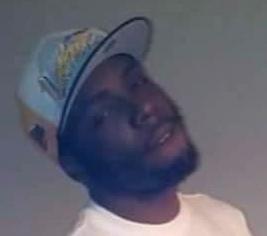
In the late summer of 2024, 23-year-old Mason Payne, a White male, found his life cut short in a moment that began as nothing more than a heated exchange. On August 24, in the Skybridge parking lot in Davenport, Iowa, a verbal argument broke out among a group of young men. Mason was there, but according to his mother, he was not part of the initial confrontation.
What started as words in a public lot near the river—an argument that could have fizzled and been forgotten—was instead transformed into a night of irreversible loss when anger, fear, and access to a gun collided.
As tempers flared and the encounter escalated, four of the boys began to leave the scene in a vehicle. Rather than taking the chance to let the moment die, someone in that car chose violence. Shots were fired from the vehicle into a crowded area, bullets tearing through the night and into the lives of everyone who loved Mason. One of those shots fatally struck him. In an instant, the argument, the parking lot, and the noise all fell away, replaced by the horror of what had just happened. For his family, time split into a before and after: before the Skybridge parking lot, when Mason’s future still stretched ahead of him, and after, when everything became about grief and the search for justice.
In the days that followed, Davenport police worked quickly, and two young men—the driver and the shooter—were arrested and charged with first-degree murder. The early narrative from investigators and court documents painted a grim picture: a vehicle pulling away, a gun fired from inside, and a young man left dying on the pavement. But as more details emerged, a particularly chilling layer was revealed through a witness statement. According to that account, the shooter had hesitated and was not going to fire, until the driver issued a chilling ultimatum: “Shoot or I will shoot you.” With that command, the driver allegedly pushed the situation over the edge, turning a volatile confrontation into a deadly act. For Mason’s family, this detail became central to their understanding of what happened—that it was not only the person who physically pulled the trigger who bore responsibility, but also the one who demanded that the trigger be pulled.
Both the driver and the shooter initially faced the most serious charge the law allows for such a killing. Mason’s loved ones took some measure of comfort in knowing that both of the young men at the heart of that night’s violence had been arrested and charged with first-degree murder. It seemed, at least at first, that the justice system recognized the weight of the driver’s alleged role in instigating the shooting as well as the shooter’s act itself. The family believed that the combination of witness testimony and the facts of the case clearly showed that the driver’s words turned a dangerous moment into a fatal one, and they trusted that the courts would hold both men fully accountable.
That hope was shaken when they learned, not through consultation but after the fact, that the prosecutor handling the case, Kelly Cunningham, had offered the driver a plea agreement. Under this deal, the driver’s first-degree murder charge was dropped and replaced with lesser counts—Solicitation to Commit, Accessory after the Fact, and Interference with Official Acts. Instead of facing the same level of punishment as the shooter, he was released after serving 327 days in custody, expected to receive probation, fines, and fees while awaiting sentencing on the reduced charges. For Mason’s family, the news came as a devastating blow. They felt blindsided by a decision made without their input, and they struggled to reconcile the leniency of the plea with the belief that, had the driver not ordered the shooting, Mason would still be alive.
In the aftermath, Mason’s mother and family turned their grief into a public plea for accountability. Through a petition demanding justice, they laid out their understanding of what happened and the way the legal process, in their eyes, had failed Mason. They described a son who had so much life ahead of him, whose death was not the result of a random accident but of choices made in a moment when cooler heads could have walked away. The petition calls on the community and elected officials to recognize that instigation and incitement can be as deadly as the act of pulling the trigger, and to ensure that the driver is held just as responsible as the shooter. It also expresses their fear that, left inadequately punished, he could pose a danger to others—a fear intensified by a reported social media photo in which he appears to be posing with what looks like a large rifle while still awaiting sentencing.
For Mason’s loved ones, the fight is now twofold: to preserve his memory as more than a victim in a case file, and to push a justice system they feel has minimized the role of one of the key figures in his death. Their petition is not only a call for a harsher sentence or a reconsideration of a plea deal; it is a plea that the full story of that night in the Skybridge parking lot be acknowledged—the words spoken, the decisions made, and the life that was taken. In telling that story, they hope to prevent other families from standing where they now stand, mourning a child whose future was stolen in a burst of gunfire that never should have happened.