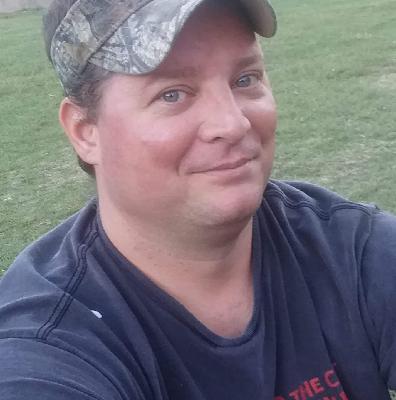
Ryan Hercher, a 39-year-old white male from Tucson, Arizona, had built much of his adult life around service and hard work. As a young man he served in the U.S. Marine Corps, even appearing in a 2002 report from Camp Lejeune as a lance corporal from Tucson helping test new camouflage uniforms, a small glimpse of him in uniformed life far from home.
Friends and colleagues would later remember him as outgoing and funny, a devoted father and a former Marine and correctional officer who worked at Pender Corrections, the kind of person coworkers described as an “awesome friend” who always had a smile and cared for others.
In the early morning hours of May 2, 2019, the quiet around the 4100 block of East 29th Street on Tucson’s east side was broken by gunfire. Around 1:20–1:30 a.m., neighbors reported hearing shots in the neighborhood near the intersection of East 29th Street and South Columbus Boulevard, not far from the Davis-Monthan area. Shortly after those first calls, a second 911 call came from a woman frantically telling dispatchers that her boyfriend, Ryan Hercher, had just been shot in the parking lot of an apartment complex at 4100 East 29th Street.
When officers arrived, they found a chaotic scene just west of the complex. Hercher lay on the ground beside his vehicle, his girlfriend nearby, as officers saw clear signs that he had been shot but noted that he was still conscious and able to speak. They began emergency aid on the pavement until Tucson Fire crews arrived, then watched as medics rushed him to Banner University Medical Center with life-threatening wounds. Despite efforts to save him, he succumbed to his injuries shortly after reaching the hospital and was pronounced dead there, another entry in the grim tally of people “lost to gun violence” recorded for that date.
Detectives pieced together the moments before the shooting from witnesses and from what Hercher’s girlfriend told them. She described how an encounter in the apartment complex parking lot had turned into a confrontation between Hercher and at least one other man. In that brief, volatile exchange, shots were fired and Hercher was struck. Wounded, he tried to drive away, steering his vehicle out of the lot and across South Irving Avenue before the car slammed into a block wall, where responding officers later found it. Early on, investigators publicly acknowledged that they had very little to work with and only knew that he had been involved with at least one other person in that parking lot near 29th Street and Columbus, and they appealed for anyone with information to come forward.
For more than a year, the case remained unresolved while detectives from Tucson Police’s Violent Crimes and gun-crimes units sifted through evidence from the scene. The turning point came through forensic work: latent palm prints recovered from the homicide scene were compared against known prints, and investigators concluded that they matched those of 33-year-old Sean Rashad-Odell Howell. On January 1, 2021, Tucson Police announced that Howell had been identified as the man who shot and killed Hercher in the apartment parking lot that night. But by then, Howell himself was dead. Months earlier, in the early hours of September 6–7, 2020, he had been shot in a gang-related confrontation in the parking lot of Christie’s Cabaret, a strip club on South Tucson Boulevard near Valencia Road. During a dispute that escalated from words to a fight involving several people, 25-year-old Dimitri Romero opened fire, and Howell was struck and later died of his wounds. Police tracked Romero down as he fled and ultimately booked him into the Pima County Jail on charges including first-degree murder and prohibited possession of a firearm, turning Howell from a living suspect in one killing into the deceased victim in another.
With Howell dead and the forensic evidence linking him to the 2019 shooting, Tucson Police effectively closed the investigation into Hercher’s homicide by identifying a single shooter who could no longer be prosecuted. No other suspects have been publicly named in connection with the killing, and there is no record of anyone being tried or convicted for Hercher’s death; the resolution comes instead in the form of a case cleared through the identification of a deceased suspect rather than a courtroom verdict. Official records of the incident list Hercher simply as a 39-year-old male victim who was killed, while online tributes preserve a more personal image: a Marine veteran, a corrections officer, a father and friend whose life intersected with violence twice over—first as the man shot in a dark Tucson parking lot, and then in the forensic trail that led police to a suspect who had already fallen to gunfire himself.