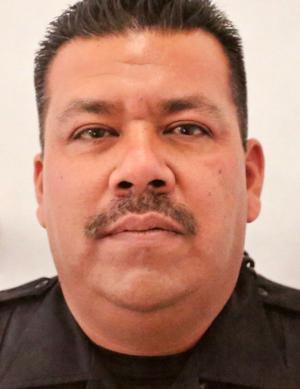
Jose Francisco “Panchito” Haro, a 43-year-old Latino man, was known first as a son, brother, father and uncle long before his name appeared in police reports. Born on June 9, 1978, he spent his life in Nogales, Arizona, surrounded by a close-knit family that included his parents, Jose Francisco and Julieta, his sister Julieta, and his daughters Shanise and Gina.
In the obituary his relatives placed after his death, they remembered him as someone whose presence lingered in the hearts of “numerous family and friends,” with nephews who affectionately called him “Uncle P” and spoke of how deeply they would miss him. A funeral Mass was held at Sacred Heart Catholic Church in Nogales at the end of January 2022, a sign of how rooted he was in the community and in the faith traditions that framed his family’s grief.
In the early hours of January 11, 2022, the quiet of the border city was broken by reports of gunfire at a motel along North Grand Avenue in Nogales. Around 4 a.m., police officers responding to the call made their way to a room where they found Haro lying inside with obvious signs of trauma; he was pronounced dead at the scene. Spanish-language coverage later described how officers had been dispatched on a report of shots fired and arrived to find a man lifeless in one of the rooms, while national and regional outlets summarized the case as one in which he was “lost to gun violence” at a Nogales motel. Gun-violence databases would later record the incident in stark terms: a man in his early forties killed in a motel room, the beginning of a homicide investigation that would stretch on for years.
Detectives from the Nogales Police Department began piecing together what had happened inside that room, treating the case from the outset as a homicide. Within a short time, they identified a suspect: a man named Gustavo Aguilar Chavez. Days after the killing, officers spotted a vehicle linked to him and tried to stop it, only for the driver to speed away and lead them on a high-speed chase out of Nogales. According to Associated Press accounts carried by multiple Arizona outlets, the chase ended with the suspect abandoning the vehicle, exchanging gunfire with officers, and then fleeing on foot. He was eventually found hiding behind a home, wounded but alive, and taken to a hospital, where his injuries were described as not life-threatening. After medical treatment, he was booked into the Santa Cruz County jail, with bond later reported at $1 million, an indication of how seriously authorities viewed the case and the danger they believed he posed.
As the initial shock of the killing faded, the case moved from the streets and the motel room into the courtroom. By the fall of 2022, local reporting summarized by national news aggregators noted that the man wounded in the shootout with Nogales police was now facing a formal first-degree murder charge in Santa Cruz County Superior Court. He had, according to those accounts, remained in custody since the January confrontation with officers, and prosecutors now alleged that he was responsible for killing the man found dead in the motel room. Gun-violence records describing the same incident listed him as the subject-suspect, injured and arrested, while Haro was recorded as the victim who had been killed, aligning the court filings with the narrative investigators had built in the months after the shooting.
Nearly three years after the night Haro died, the case finally reached a jury. In early 2025, summaries of Nogales International coverage reported that a jury trial for Gustavo Aguilar Chavez was underway in Santa Cruz County Superior Court, centered on the killing of a man at a local motel in 2022. For Haro’s family, it marked the moment when years of waiting translated into days of testimony, legal argument, and the painful re-telling of what happened in that small motel room and during the violent chase that followed. After hours of deliberation, however, the twelve jurors could not agree on a verdict. On February 15, 2025, Superior Court Judge Liliana Ortega declared a mistrial after the jury deadlocked on the first-degree murder charge, leaving the case unresolved and forcing prosecutors to decide whether to try again. Gun-violence case notes echo that outcome in shorthand, recording that the prosecution ended in a mistrial in February 2025 rather than in a conviction or acquittal.
In the public record that remains, there is no clear sign of a final resolution to the criminal case, no published report of a new trial or a definitive verdict that would close the legal chapter of Haro’s death. What stands out instead is the contrast between the formal, procedural language of courts and police reports and the intimate tone of his obituary and memorial page, where family members and community members continue to post memories and light virtual candles in his name. They remember “Panchito” not as a case file or an entry in a database but as a son seated at family gatherings, as a father whose daughters now carry his absence, and as an uncle whose nephews still speak of him with affection. In that sense, even as the justice system struggles to reach a conclusion, the people who loved him have already written their own verdict about the place he held in their lives and the weight of the loss they carry from the night he never came home.