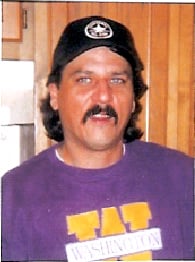
Kevin S. Turner, a 34-year-old Alaskan Native, male from Anchorage, was found dead just before 2 a.m. on August 28, 2016, in Valley of the Moon Park, a wooded greenbelt near downtown where bike paths crisscross the trees and picnic pavilions. Police were called after a passerby discovered one body on the trail; officers searching the darkness found a second victim nearby. The men were identified as Kevin S. Turner, 34, and Bryant C. De Husson, 25.
Detectives treated the scene as a double homicide and cautioned that no one was in custody. In the days that followed, worry rippled through a city already bruised by a surge in killings that summer.
For months, there were few public answers. The clues that did surface pointed to a pattern: late-night ambushes in or near parks and along trails, little usable evidence left behind, victims with no clear connection to one another. That uneasy pattern hardened into a theory after a November 12, 2016, gunfight downtown, when Officer Arn Salao was shot multiple times and, together with a responding sergeant, returned fire and killed the assailant, 40-year-old James Dale Ritchie. Ballistics testing on the Colt Python. 357 revolver taken from Ritchie linked it to five unsolved Anchorage homicides from the summer—two double killings and one single homicide—including the shootings of Kevin S. Turner, 34, and Bryant C. De Husson, 25, in Valley of the Moon Park.
On April 26, 2017, after months of joint work with the FBI and extensive forensic review, Anchorage police announced they had “sufficient probable cause” to conclude that Ritchie was responsible for all five murders tied to that weapon. Because Ritchie died in the November shootout, there were no arrests; the cases were closed with him identified as the sole suspect. For Kevin S. Turner, 34, male, the official narrative is stark: a quiet summer night, a city park, and a killing ultimately traced by the cold geometry of ballistics to a gun carried by a man who would never stand trial.