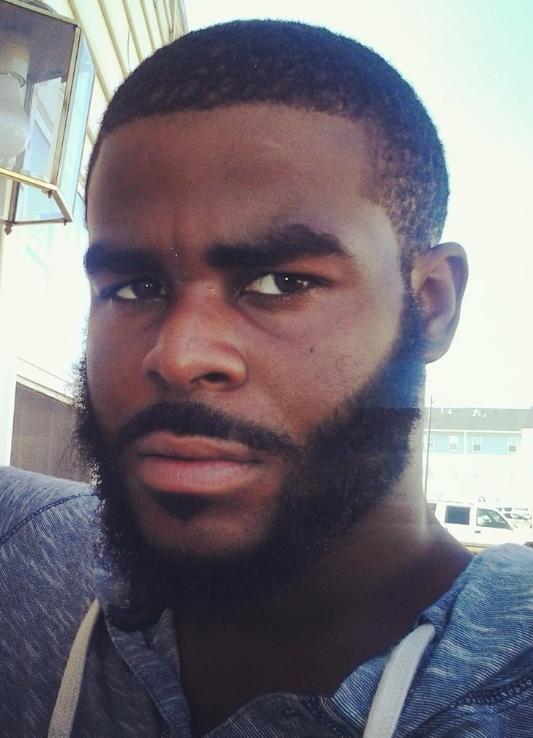
Do you know who murdered Robert Alexander? Robert Lee Alexander Jr., a 22-year-old African-American man, moved through the early spring of 2005 with the easy warmth that friends later remembered from bowling nights, road trips and family gatherings. He was known as “Rob” to those closest to him, a beloved son of Robin J. Holloway and Robert L. Alexander Sr., surrounded by grandparents, aunts, uncles and friends who would later crowd a Hyattsville church to say goodbye after his life was cut short.
Earlier that month, the neighborhood around 4975 South Dakota Avenue NE had already been shaken by one killing. Cabdriver Esiais Alazar was robbed and fatally shot outside the 4 Seasons convenience store there, a crime that remained unsolved. In later accounts, Alexander appears not just as a name on a police flyer but as a young man caught in the dangerous gravity of that first homicide: he was described as having been a witness to Alazar's killing, someone who had seen too much in a city that had long struggled with violence and retaliation against people who cooperated with law enforcement.
According to those same later summaries, relatives recalled that on the night he died, Alexander received a phone call from a friend asking him to meet up. He left to answer that call, stepping into a world where, for weeks, fear had been simmering after the cabdriver's murder. Twenty days after Alazar was shot, Alexander himself was gunned down.
The official record fixes his final moments with stark precision. On Thursday, March 24, 2005, at approximately 9:21 p.m., Metropolitan Police officers were called to the 1000 block of Gallatin Street NE in Washington, D.C. There, Alexander had been shot; the police reward flyer and later summaries simply say he was “shot to death,” offering no comforting details about a last word or a familiar face at his side. The location—an ordinary residential block in Northeast—was transformed in an instant into a crime scene, another point on the map in a city still wrestling with the legacy of its years as the nation's “murder capital.”
In the days that followed, his family prepared a funeral instead of watching him grow older. An obituary in the Washington Post announced his sudden death on that Thursday in March and invited mourners to New Dawn Baptist Church on Riggs Road in Hyattsville, Maryland, where friends and relatives remembered a young man who, as several of them later wrote, bothered no one, loved to laugh and compete at games, and had a smile people struggled to forget. He was laid to rest at Fort Lincoln Cemetery, leaving behind parents and grandparents who now had to grieve not only his absence but the violent way he had been taken from them.
For detectives, the case became one more file in the Violent Crimes Branch, but it was a file that never closed. The Metropolitan Police Department issued a reward poster offering up to $25,000 for information leading to the arrest and conviction of the person or persons responsible. The flyer emphasized that the department was seeking the public's help, listing the telephone numbers of Detective James King, Detective Greg Sullivan, and the department's Synchronized Operations Command Center, a standing invitation for anyone with knowledge of what happened on Gallatin Street to step forward. Years later, MPD's “Major Case/Unsolved Homicides – 2005” page still lists “Alexander, Robert Lee – March 24, 2005, 1000 Gallatin St., NE,” a digital reminder that the investigation remains open.
Other organizations picked up his story as time passed. True-crime and cold-case sites cataloged his name, noting that he had been shot to death in Washington, D.C., that he was male and African-American, and that his death was classified as a homicide. They repeated the same key facts: the date and time, the 1000 block of Gallatin Street NE, the plea for information, and the unresolved nature of the crime. Some of these summaries explicitly tied his killing back to the earlier robbery and murder of cabdriver Esiais Alazar, presenting Alexander as a young witness who never lived long enough to testify.
Despite the reward, the flyers, and the years of quiet investigation, there is no public record of anyone being arrested or charged in connection with Alexander's death. Police materials and later case summaries consistently describe the homicide as unsolved, with no suspect named and no closure announced for his family. What remains instead is a portrait assembled from fragments: a smiling young man remembered by loved ones, a possible witness to another killing, a late-evening phone call from a friend, a gunshot on a Northeast street, and a case file that still waits for someone to come forward with the piece of truth that will finally give his family answers.