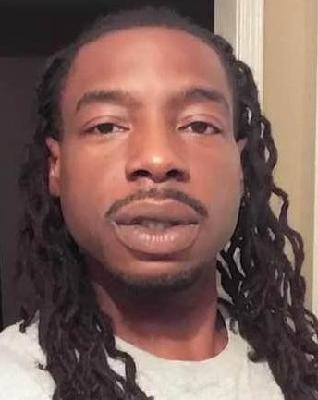
Anthony Jeter, a 33-year-old Black man from Montgomery, Alabama, became the center of a case that unfolded with heartbreaking slowness rather than ending in a single terrible instant. On August 3, 2017, he was shot in Montgomery, and from that moment his life seemed to hang in the balance between hope and grief. He was taken to Baptist Medical Center South, where he remained for weeks, fighting to survive the injuries that had been forced upon him.
What makes his story especially painful is that it was not a sudden death at the scene, but a long and uncertain struggle, the kind that leaves family, friends, and a community clinging to every update, praying for a recovery that never came.
For more than a month, Anthony’s story was one of survival, endurance, and waiting. Somewhere around him were the sounds of hospital machines, worried voices, and loved ones trying to believe that somehow he would come through. Cases like his carry a special kind of sorrow because time stretches out the suffering. There is the shock of the shooting itself, then the long, agonizing period afterward when every day holds both fear and hope. In Anthony Jeter’s case, that fight ended on September 16, 2017, when he died from the gunshot wounds he had suffered in the August attack. His death transformed the case from a shooting investigation into a homicide, confirming what those closest to him had likely feared from the beginning: the violence done to him had stolen not only his peace, but ultimately his future.
As investigators worked the case, they identified a suspect as Ledrick Jackson, 27. Authorities stated that Jackson had already been arrested on August 19, 2017, in connection with the shooting, before Anthony passed away from his injuries. After Anthony died, the case took on even greater weight, and police said Jackson was charged with capital murder. That progression gives the case a grim and tragic structure: first the gunfire, then the arrest, and finally the formal acknowledgment that this was no longer simply a matter of injury, but of a life lost. It is the kind of sequence that underscores how fragile life can become after one violent moment, and how the justice system often follows behind the suffering, trying to catch up with damage that can never truly be undone.
What remains especially moving about Anthony Jeter’s story is the way it reflects both violence and endurance. His name is tied not just to the night he was shot, but to the days and weeks afterward when he was still here, still fighting, still giving those around him reason to hope. There is a particular sadness in that kind of loss because it leaves behind a trail of emotional exhaustion as well as grief. Loved ones do not simply endure the news of a death; they endure the waiting, the uncertainty, the desperate wish for healing, and then the crushing moment when hope gives way to finality. His death must have left behind unanswered sorrow in the hearts of those who knew him best, because when someone lingers after such violence, every extra day can deepen both attachment and heartbreak.
Although the available information clearly points to an arrest and a capital murder charge, the publicly available details do not make the final courtroom outcome clear. Even so, Anthony Jeter’s case was not one that disappeared into silence at the investigative stage. Authorities publicly connected his death to the August 3 shooting, named a suspect, and brought serious charges after he succumbed to his injuries. That means his story stands not only as a record of violence, but as the story of a man whose suffering was seen, whose death was acknowledged, and whose case moved forward in the hands of investigators seeking accountability.
In the end, Anthony Jeter’s story is devastating because it feels so human in every stage. There was the abrupt cruelty of the shooting, the long hospital fight, the fragile hope that maybe he would survive, and then the sorrowful reality that he did not. His death was not just a statistic or a case file, but the loss of a living person whose life was interrupted in the most painful way possible. What remains is the image of a man who endured for weeks after the violence, and of a city left to reckon with the cost of that attack. His story carries the ache of unfinished time, of family and friends forced to let go slowly, and of a life that should have continued far beyond that summer in Montgomery.