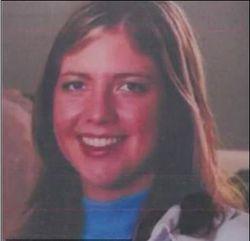
Gynette Tucker, a 74-year-old Caucasian woman living alone in a modest house in northwest Oklahoma City, kept a quiet but steady routine. Neighbors said she rarely went out except for church on Sundays, where her regular presence in the pews was something people had come to expect. She had moved to Oklahoma from California and was originally from San Jose, carrying with her the life and memories of a former Bay Area resident now aging in a calmer neighborhood far from the coast.
Those who lived nearby remembered the small, gentle rituals that defined her days: brief conversations over the fence, the sight of her in the yard, and the devotion she showed to her two or three small dogs, which she doted on like constant companions.
In mid-November 2013, that quiet routine abruptly stopped. On a Saturday morning, around 9 a.m., officers were called to perform a welfare check at her home in the 4000 block of Northwest 14th Street, a residential street near Northwest 16th and Portland Avenue that usually saw little more than everyday traffic and neighborhood walks. Inside the house, police found Tucker’s body. At first glance, officers could not see an obvious cause of death, and the scene did not immediately offer clear answers. Neighbors, looking on from their porches and windows, were stunned; this was a block where people prided themselves on low crime and a sense of safety. Some wondered aloud whether someone had broken into her home, while others simply struggled to reconcile the sight of police cars and crime-scene activity with the image they held of the polite, elderly woman who had never bothered anyone.
The mystery deepened when the Medical Examiner reviewed the case. Although officers initially saw nothing that clearly explained why Tucker had died, the Medical Examiner reported that she had suffered trauma to her body, and her death was formally classified as a homicide. In a separate account, authorities later confirmed that she had been beaten to death, a brutal reality that contrasted sharply with the quiet life she had led. Police did not publicly release details about the nature of the injuries or exactly how the attack had unfolded, and they were careful not to specify how they believed the killer had entered the home. Neighbors said they saw no obvious signs of a break-in, which only fueled speculation that whoever did this might have been someone Tucker trusted enough to let inside, or someone skilled at leaving little trace.
In the days that followed, her house became a painful focal point. Family members traveled in and out, handling the immediate necessities while grieving a loss that had come without warning. Obituary notices described Tucker as a former resident of San Jose, California, and noted that she left behind six children—Jeff, Sandy, Vince, Erik, Lana, and Marc—as well as a large extended family that included seventeen grandchildren and four great-grandchildren. A celebration of her life was planned back in San Jose, where people who had known her earlier in life could gather, share stories, and say goodbye, even as the questions surrounding her death remained unanswered. Between Oklahoma and California, her family and friends were left to mourn a woman remembered as kind and loving, without the comfort of knowing who had taken her from them or why.
For the neighborhood in Oklahoma City, the killing shattered the sense of security many had taken for granted. Residents spoke of neighborhood watch programs and the general lack of serious crime on their street, and they struggled with the idea that such violence could have erupted behind the familiar walls of Tucker’s home. Local news coverage emphasized that this was not a case connected to drug activity, gangs, or a high-risk lifestyle; instead, it was the inexplicable killing of an elderly woman who kept largely to herself, went to church, and spent her time caring for her pets. Police urged anyone with information to contact the homicide tip line, reiterating that even a small detail might help them reconstruct what happened in the hours before Tucker was found.
Despite those appeals, authorities reported that no one had been arrested in connection with Tucker’s death, and no suspect has ever been publicly named. Over the years, her case has continued to appear on lists of unsolved homicides from Oklahoma City, a reminder that the investigation has not brought the closure her family and neighbors hoped for. The house where she once sat outside with her dogs, greeting neighbors and preparing for Sundays at church, now exists in the public record as a crime scene—a place where a quiet life ended violently, and where, so far, justice has not yet caught up with the person responsible.