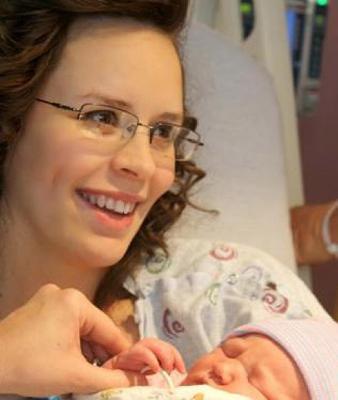
Alexis-Shawna Russeil, a 20-year-old Black woman from Tulsa, Oklahoma, climbed into a car at the Polo Club Apartments in east Tulsa on a June evening in 2014, twenty-two weeks pregnant with the child she was carrying. The complex sits near East 41st Street and 129th East Avenue, and it was there, on June 2, that gunfire tore through what should have been an ordinary night.
According to later case summaries, someone opened fire on the vehicle, and a bullet struck her in the neck at the base of the skull, leaving her critically wounded in an instant.
She did not simply slip away that night. Instead, the shooting pushed her into a long, brutal medical struggle. Family members would later describe how she spent months in a coma, fighting to stay alive. During that time, doctors delivered the baby she had been carrying, a “miracle” daughter named Rashyia Gist, while Alexis was still unconscious. Even in that condition, she became a symbol of stubborn courage to those around her, hanging on long enough to meet milestones that many thought impossible after such devastating injuries.
To understand what was stolen from her, it helps to look at the life she had built before the shooting. Born in August 1993, Alexis was remembered by her family as precocious from the very beginning—walking and talking clearly before her first birthday, reading and writing when most children are just starting preschool. As a teenager she took her first job at a Sonic drive-in, and within months she had been promoted to assistant manager, a sign of the drive and work ethic the people around her praised.
Her determination showed up most clearly in how she approached motherhood. She graduated from Nathan Hale High School in 2011 while pregnant with her first son, Edward, balancing classes and impending parenthood when many her age were thinking only of themselves. A second child, Emery, followed in 2013, and for a time she stayed home, pouring her energy into raising her boys. Later she returned to the workforce, including a stint at JCPenney, but she gravitated back to Sonic, where she was known for playful food creations she invented, including a dessert she jokingly called the “pregnant lady sundae.” Friends and family remembered her as sassy, bossy in a loving way, endlessly energetic, with a laugh and smile that lit up rooms.
After the shooting, that bright personality existed mostly in the memories of the people who loved her. The obituary her family wrote speaks of months in which they surrounded her bedside, reading to her, talking to her, and watching for any sign that she might somehow break free of the coma. They describe her as the strongest woman they had ever known, someone who refused to give up, even as her body struggled under the weight of catastrophic injury and complex medical care. In the end, those same loved ones wrote that she had “struggled enough.” On March 1, 2015, they said, she was “granted her angel wings,” her long fight finally over.
Today, case-tracking records classify what happened to her as a homicide, a “death by force,” and list her as having been found and attacked on June 2, 2014, in Tulsa, with the case marked as solved. Those same records confirm that she was a young mother, twenty at the time she was shot, sitting in a car at the Polo Club Apartments in east Tulsa when a round struck her at the base of the skull. Yet, in the publicly accessible portions of those records, the person or people responsible remain faceless: the databases note only that the case is solved, without publishing the name of any suspect, the details of an arrest, or the story of how the investigation reached its conclusion. For anyone looking in from the outside, what is left is a partial narrative—one that preserves the place, the date, and the violence, but leaves the specific identity of the killer behind a curtain of sealed files and unshared court documents, while the fullness of Alexis-Shawna Russeil’s life survives mostly in the memories and tributes of the family she fought so hard to stay with.