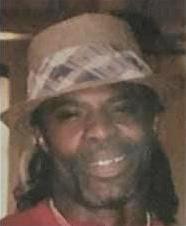
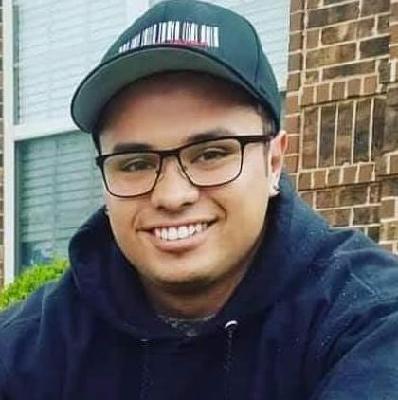
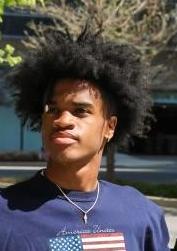
Frank Louis Williams, a 30-year-old Black man from Oklahoma City, Oklahoma, had built a steady life for himself as a truck driver for the Oklahoma City Highway Department, far from his birthplace of Pine Bluff, Arkansas. He was known within his circle as someone who worked hard and cared deeply about his family, a son to Dorothy and Jose Arcia and a young father devoted to his two children, Zariyah and Zaybrau.
He was engaged to his fiancée, Timmithi Crittenden, and those close to him imagined a future filled with ordinary milestones: more years on the job, watching his children grow, and finally celebrating a wedding that would formally tie together the family he was already nurturing.
On the night of July 1, 2015, that future was cut short on a quiet residential stretch near the Oklahoma City Zoo. Just before midnight, around 11:55 p.m., a series of gunshots shattered the calm in the 1700 block of Meyers Place, prompting multiple emergency calls. When officers arrived at a home at 1708 Meyers Place, they found Williams lying in the driveway, critically wounded by gunfire. Emergency responders rushed him to OU Medical Center in hopes of saving his life, but despite those efforts, he was pronounced dead at the hospital in the early hours that followed.
In the hours after the shooting, detectives moved quickly through the neighborhood, interviewing witnesses who had heard or seen parts of the chaos unfolding outside. Yet even as they pieced together the basic outline of that night, the motive for the attack remained unclear. Investigators announced that they were searching for multiple suspects and a four-door vehicle believed to be connected to the shooting, but no names were released and no one was taken into custody. As time passed, the case did not resolve into the neat closure of an arrest or trial. Instead, it remained an open wound for the people who loved him: parents suddenly without their son, children who would grow up with memories and stories instead of new moments, and a fiancée left to carry the weight of plans that would never be realized.
Years later, the details of that night are still stark and unfinished: a hardworking father and partner, gunned down in a driveway; a flurry of emergency calls and frantic efforts to save him; and an investigation that, according to available public records and case summaries, has yet to yield any arrests or publicly named suspects. In the absence of answers, what remains most vivid is the contrast between the life Williams was building—a steady job, close ties to his parents, a young family depending on him—and the sudden, unexplained violence that took him away, leaving his loved ones and community to live with questions that, so far, no one has been able to answer.