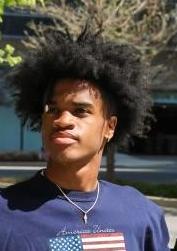
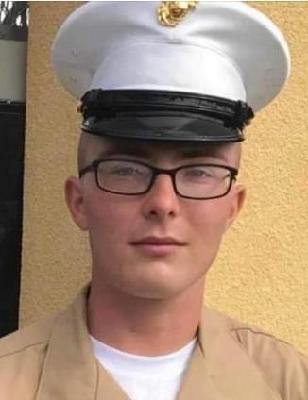
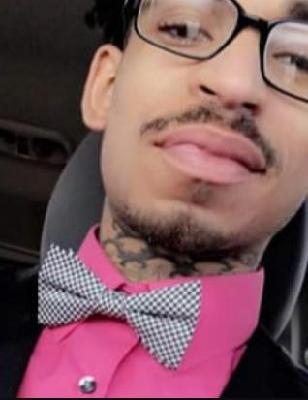
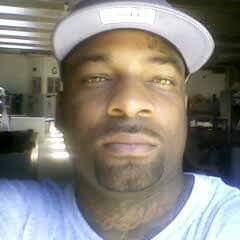
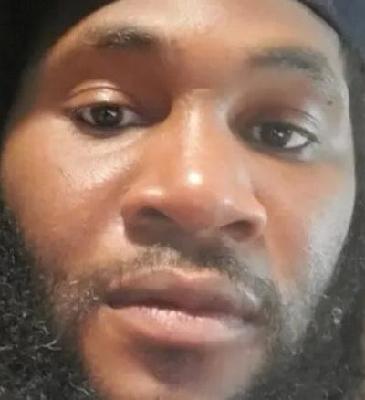
Cody Davis, a 21-year-old African-American man from Oklahoma City, headed out on a Monday night in early November 2012, unaware that a brief meeting in a parking lot would be his last. He drove to an apartment complex near Northwest 26th Street and North Meridian Avenue, a cluster of buildings and asphalt where people came and went under the glow of security lights and streetlamps.
It was there, in that ordinary lot, that a planned drug transaction spiraled into a deadly encounter that would leave him mortally wounded in his car.
What happened in those moments was quick and violent. Investigators later concluded that the supposed deal became a robbery, the kind of sudden turn where raised voices and tension give way to the crack of gunfire. When police reached the scene, they found Cody in his vehicle, shot in the parking lot of the complex along North Meridian. He was taken from that asphalt to a hospital, but the damage was too severe; after being found on November 5, 2012, he died the following day, his life ending while the city around him moved on into another routine workweek.
In the first months and years after the shooting, the case hung over his family like a storm that would not pass. Cody had been a young father, and local coverage emphasized that a little girl was left to grow up without the man who adored her. His mother, April Davis, spoke publicly about how gentle he really was beneath a big, imposing frame, and how difficult it was to accept that her granddaughter would have only faint memories—or none at all—of her dad. She described stopping at his grave every morning before work, a ritual of grief and perseverance carried out while the investigation stalled and no one had yet been brought to account.
Years passed with little visible movement, but detectives continued working the file, treating the shooting as more than just another drug-related crime. In 2016, there was finally a break: an arrest warrant was issued for Mickiah Raymond Fauteux in connection with the killing, and he was taken into custody in early November, almost exactly four years after the shots were fired. The warrant charged him with first-degree murder, and his arrest was a moment of painful relief for Cody's mother, who said it had been a long four years of waiting and visiting her son's grave. Prosecutors had not yet filed charges at the moment of that initial report, and Fauteux would later plead not guilty to the murder charge, but his arrest marked the first concrete sign that the case was moving toward court.
The investigation did not end there. By 2018, police announced that two more men—Marquinez Dwight Woody and Mychael Delray Hill—had been arrested on complaints of first-degree murder tied to the same November 5, 2012 shooting in the parking lot off North Meridian. Their arrests came after Fauteux's, adding new names to the roster of accused participants in the robbery-turned-homicide. Authorities described all three as connected to the events that led to Cody's death, with court filings and news reports indicating that they were part of a group involved in the ill-fated drug deal that ended in gunfire.
Later reporting revealed an even larger circle of defendants. In 2023, a local news story identified a man named Anthony Rangle as one of five individuals who had been arrested and convicted in connection with Cody's murder, noting that police believed the killing occurred during a drug deal that turned into a robbery at the apartment complex. Rangle had been taken into custody in 2016, years after the crime. But his case took a dramatic turn when appellate proceedings found problems with the felony-murder conviction based on the underlying drug distribution charge. New court documents said he acknowledged being present at the deal but denied being aligned with the seller whom he claimed actually fired the fatal shots. A court ordered a new trial, effectively undoing his previous conviction and sending his case back into the system, even as the broader group of defendants remained tied to the homicide.
Despite these legal twists, public case summaries now list Cody's homicide as solved, reflecting law enforcement's position that they have identified the people responsible for orchestrating and carrying out the deadly robbery that claimed his life. Yet for his family, “solved” does not mean finished. The years of waiting for arrests, the complicated web of defendants, and the ongoing legal battles for at least one man involved mean that Cody's story is still playing out in courtrooms and case files. What remains constant is the image of a young father whose life ended in a dim Oklahoma City parking lot, and a family that continues to carry his memory forward while the justice system slowly, imperfectly, tries to reckon with what happened that night.