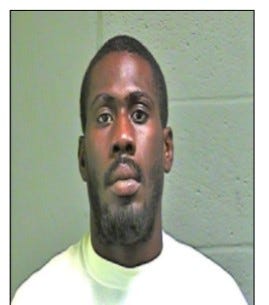
On September 20, 2007, David Mason, a 44-year-old Black man from Oklahoma City, Oklahoma, was found dead, the victim of a shooting that would soon be ruled a homicide. The discovery marked the abrupt end of a life whose final hours remain obscured by unanswered questions. What is known is stark and spare: he was located in Oklahoma City that day, and investigators quickly determined that the gunshot wounds that claimed his life were the result of intentional violence rather than an accident or
self-inflicted harm.
In the days that followed, detectives began trying to piece together how David came to be in the place where he was killed and who might have wanted to harm him. Yet, even early on, the public record shows little clarity about the events leading up to the shooting. Authorities did not release information about a motive, nor did they share details about any confrontation, location-specific disputes, or personal conflicts that might explain why he was targeted. Instead, the circumstances remained frustratingly vague, with investigators acknowledging that the lead-up to the gunfire was unclear.
As time passed, the investigation drifted further from resolution. Law enforcement sought information and, according to later summaries of the case, continued to look for leads that could identify who was responsible. But no breakthrough came. The case was eventually described as having grown cold, and there is no record of any suspect being publicly named. No one has been arrested in connection with David Mason's killing, leaving his homicide officially unsolved and his family and community without the justice that might come from seeing those responsible held to account.
Beyond the bare facts of the crime and its stalled investigation, only fragments of his story are preserved in public records. Online memorial information notes that a man named David Mason who died on September 20, 2007, at the age of 44 was laid to rest at Wilson Cemetery in Newby, Creek County, Oklahoma, suggesting a final resting place some distance from the city where his life was taken. It is there, far from the still-unanswered questions of the investigation, that his grave stands as one of the few tangible markers of a life cut short and a case that, despite official attention, remains without resolution.