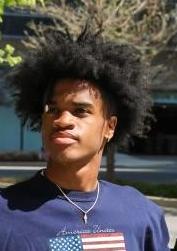
Tyree Ivy, a 19-year-old Black man from northeast Oklahoma City, was known in his community as a local high school football player, a running back for Oklahoma Centennial High School’s team and a member of the class of 2016, moving through the world with the plans and promise of a teenager who had only just finished school. On an October evening in 2016, those ordinary plans collided with a petty grievance that spiraled into something brutal.
According to court documents later described by investigators, Ivy told a man named Trent Colbert that Colbert’s wife had been flirting with him at an apartment complex near Northeast 36th Street and Prospect. What might have remained an uncomfortable conversation instead became the spark for a confrontation. Later that same evening, Colbert approached Ivy outside one of the apartments, and the argument turned violent. Colbert punched Ivy in the back of the head, knocking him to the ground, and while Ivy lay unconscious, Colbert stomped on his head several times, delivering the blows that would eventually prove fatal.
In the confusion that followed, Ivy did not arrive at the hospital in an ambulance. On October 18, 2016, three people – identified by police as Trent Colbert, Monray Goggins and Carlisha Easton – drove him to OU Medical Center, dropped him off with a traumatic brain injury, and left without speaking to officers. Investigators later said they believed the assault had taken place at the Sooner Haven Apartments on Northeast 36th Street, a low-slung complex in northeast Oklahoma City. The force of the attack left Ivy in a coma-like state, with severe head trauma that doctors and police feared might be permanent. Early reports described him as a teen whose life had been irreversibly altered, and detectives publicly pleaded for help identifying and interviewing the people who had brought him to the hospital, believing they might hold the key to understanding how and why he was attacked.
For months, Ivy’s life was defined by hospital rooms and medical machinery. He remained at OU Medical Center for about seven months, his body kept alive but his future uncertain. When he was finally discharged in early May 2017, it was not because he had recovered; court records later summarized by reporters note that he was confined to his bed at home and required round-the-clock care as a result of the injuries to his brain. In July 2017, the fragile line he was walking gave way. Ivy was found unconscious again and died on July 12, 2017, with the state Medical Examiner ruling that he had succumbed to the injuries inflicted during the October assault. Police reclassified the case as a homicide investigation, noting that his death became one of Oklahoma City’s growing tally of killings that year.
The investigation into who was responsible for the assault moved in stages. In the months after Ivy was first hospitalized, Oklahoma City police released surveillance images and publicly named the three people who had driven him to the hospital, saying they wanted to question them about what had happened. Colbert and Easton had already been identified; the third person, later named as 19-year-old Monray Goggins, became the focus of a search, with police noting that he had last been seen at an apartment complex on West Hefner Road and asking anyone with information to come forward. As the case developed, attention turned more sharply toward Colbert. By late October 2017, local reports stated that he had been arrested and jailed without bond, charged with second-degree murder in Ivy’s death. Authorities alleged that his attack – triggered by jealousy and anger over perceived flirting – set off the chain of events that began with a beating outside an apartment building and ended, months later, with Ivy’s death in his bed. Publicly available reports do not detail the ultimate outcome of those charges, but they capture the arc of the case: a young athlete’s life cut short, an assault born from bruised pride, and a homicide file that turned on the question of how a few blows to the head could ripple outward into a death almost nine months later.