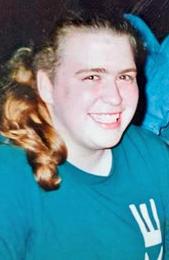
Wanda Line, a 21-year-old White woman from Columbus, Ohio, was living an ordinary winter week when she vanished into a quiet stretch of the Far West Side. On January 2, 1984, she was last seen alive by a co-worker, the kind of everyday sighting that only turns ominous in hindsight. Sometime after that final, routine moment, something went terribly wrong.
The next day, January 3, 1984, Wanda was found dead inside the apartment where she had been staying—an address on Darien Avenue, identified by investigators as 100 Darien Ave. The setting wasn’t described as her own home, but as a place she was temporarily staying with a friend, which only deepened the mystery around what led her there and who knew she was inside. She had been beaten to death, and the brutality of that detail has hung over the case ever since.
In the years that followed, investigators acknowledged how thin the trail was. The motive was never clearly established, and even the sequence of events in the hours before she died was described as uncertain—sketchy, with gaps that only someone who was there could fill. Decades later, law enforcement still emphasized that they had very little to go on, urging anyone who might remember something—an argument, a visitor, a name mentioned in passing—to come forward, no matter how small it seemed.
As of the most recent public case listings and coverage, no arrest is reported, and no suspect or suspects are publicly identified by name in connection with Wanda’s killing. The case remains open and unsolved under the Franklin County Sheriff’s Office, and it continues to be circulated through Ohio’s cold-case channels in hopes that a forgotten detail, an old rumor, or a long-held secret finally finds its way to investigators.