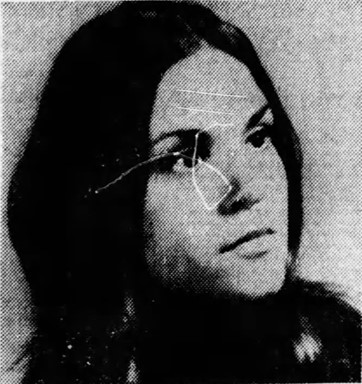
More than half a century has passed, but the murder of Teresa Guarino remains a painful open wound for the city of Boston. Her case is one of the city's oldest unsolved homicides, a lingering mystery from a spring day in 1971. Details about Teresa's personal life have faded with time, leaving behind only the stark and brutal facts of her final moments. Who she was, what she loved, and who loved her are questions that have been largely lost to the historical record, overshadowed by the unanswered question of who took her life.
On Monday, April 12, 1971, officers from the Boston Police Department were dispatched to the Boston Parks and Recreation Department grounds in the Jamaica Plain neighborhood. A call had come in reporting the discovery of a body. There, police found a woman who was pronounced deceased at the scene. She was later identified as Teresa Guarino, a female estimated to be between 55 and 65 years of age.
The exact circumstances of her discovery in the park are not publicly detailed, but the location itself, a place meant for community and leisure, adds a layer of tragedy to the crime.
The initial investigation was handled by the Boston Police Department. Following the discovery, Teresa's body was transferred to the Office of the Chief Medical Examiner for an autopsy. The examination concluded that her death was not accidental or natural. The medical examiner determined that Teresa Guarino was the victim of a homicide. The specific cause of her death has not been released to the public, a common practice in open investigations to protect details that only the perpetrator would know. The lack of public information about her injuries or the manner of her death leaves a void in the narrative of what happened that day.
The investigation in 1971 faced challenges inherent to the era, which lacked the advanced forensic technology, such as DNA analysis and digital databases, that are now standard in homicide cases. Detectives would have relied on traditional methods of canvassing the area for witnesses and pursuing leads through interviews. The area of Jamaica Plain where Teresa was found is part of Boston's extensive "Emerald Necklace," a chain of parks designed by Frederick Law Olmsted. In the 1970s, as today, these parks were a central feature of the city, used by thousands of people. It is unknown if any witnesses ever came forward or what evidence, if any, was collected from the scene.
Over the decades, the case has grown cold. The Boston Police Department continues to list Teresa Guarino's murder as an open and unsolved investigation on its official website, a quiet acknowledgment that justice has not yet been served. Her file sits alongside dozens of other unsolved homicides from that year, a grim catalog of lives cut short. Without new information or a breakthrough in forensic analysis of any existing evidence, the case has remained dormant. There is no public record of persons of interest ever being named or arrests being made in connection with her death.
As of today, the investigation into the murder of Teresa Guarino remains with the Boston Police Department's Unsolved Homicide Unit. Detectives encourage anyone with information, no matter how insignificant it may seem, to come forward. After more than five decades, it is possible that someone holds a piece of the puzzle that could finally bring clarity and resolution. The passage of time can change allegiances and ease fears, and the police hope that someone's conscience may lead them to share what they know. The department has not specified if a reward is available for information leading to an arrest. Anyone with information is urged to contact the Boston Police Unsolved Homicide Unit.