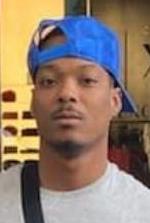
David E. Bell was a man who spent his life dedicated to education and, in retirement, to providing housing for those in need. A 49-year-old retired mathematics teacher, he had taught for 25 years in Montgomery County, Maryland, public schools, including Richard Montgomery High School and Winston Churchill High School. After retiring, the Bethesda resident turned his attention to the Eastern Shore, buying, renovating, and renting out properties in Somerset and Worcester counties. He saw a need in the struggling town of Crisfield and aimed to help, converting old Victorian houses into affordable rental units. Friends remembered him as a "good, little old man" who enjoyed watching television, following the Washington Redskins, and working on math equations. His family, however, worried about his safety, as he rented to tenants without conducting background checks. His daughter, Karen, later said, "He really wanted to help...
We were worried, and we told him to be careful, and this is the result."
In February 1997, those fears were tragically realized. Bell had last been in contact with his family on February 8. When weeks passed with no word, his brother and sister grew deeply concerned, particularly because he was diabetic. On the morning of Thursday, February 27, 1997, they traveled to his residence in the 300 block of Chesapeake Avenue in Crisfield. Accompanied by the local police chief, they hired a locksmith to gain entry to the first-floor apartment where Bell lived. Inside, they made a devastating discovery: David Bell was lying in the hallway, deceased. He had been brutally killed in what was the first homicide to strike the small town of 3,000 in nearly a decade.
An autopsy by the Chief Medical Examiner determined that Bell had died from multiple stab wounds, described as lacerations to his upper neck and torso. The crime scene was chaotic. The house was in the middle of renovations, with what the police chief described as “piles of stuff here and piles of stuff there,” making it difficult to determine if a struggle had occurred. Investigators noted there were no signs of a forced entry, leading them to theorize that Bell likely knew his attacker and had let them into his home. A blood-stained mattress was found near his body, but no murder weapon was ever recovered. Robbery was considered a strong motive, as Bell's wallet and keys were missing, and his daughter told reporters that his records indicated he had recently collected rent money.
The investigation was immediately taken over by the Maryland State Police Homicide Unit at the request of the Crisfield Police Department. Detectives canvassed the quiet neighborhood and began the arduous process of interviewing Bell’s family, friends, and his numerous tenants. One tenant noted that he "knew something was wrong because the light and the television was on downstairs" for several days, but the shades were drawn, obscuring the view inside. The lead investigator at the time, Cpl. Vanessa Pinder, stated that police were "interviewing everyone that might have known him."
The killing stunned the local community. Crisfield Police Cpl. Gale Jones told a reporter, "The neighbors are upset, and people are shook up." The police chief, Vic Rayne, who lived just two blocks from the scene, tried to reassure the public, stating his personal opinion was that the killer was known to Bell and that the murder posed no wider cause for public concern. Despite extensive investigation, police were unable to identify a suspect or make an arrest in the case.
Decades later, the murder of David E. Bell remains an open and unsolved homicide. His case is listed on the Maryland State Police cold case files, a persistent reminder of a life of service cut violently short. The investigation is ongoing, and authorities continue to seek any information that might finally bring a measure of justice to his family and the community he sought to improve. The Maryland State Police Homicide Unit urges anyone with information, no matter how insignificant it may seem, to come forward. Tips can be submitted to the Cold Case Unit by phone at 410-749-3101.