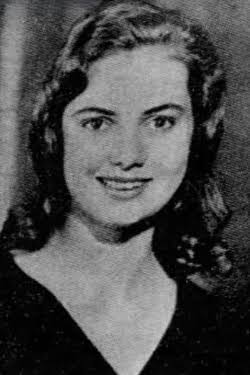
In the fog-shrouded timber town of Aberdeen, Washington, a brutal crime in the winter of 1940 shattered a family and exposed the raw, violent tensions simmering beneath the surface of the community. Lea Laura Luoma Law, a 25-year-old Finnish immigrant, was a wife and mother known for her activism and sweet nature. She was deeply involved in her community, organizing marches for the unemployed and serving as an activist with the women's auxiliary of the International Woodworkers of America (IWA) union. Laura was married to Richard "Dick" Law, a prominent, and often controversial, militant labor leader and accused communist, a central figure in the region's fierce union battles.
On the night of January 5, 1940, while her husband was at a union meeting, an intruder entered the family’s home at 1117 East 2nd Street. The attack was savage and swift. Laura was bludgeoned with an axe, her skull caved in, and she was also reportedly stabbed with an object resembling an ice pick.
The murder was executed so quietly that her toddler son, just shy of three years old, was discovered the next morning by his grandparents, sleeping peacefully and unharmed in the adjacent room. Laura’s parents had come to the house only to find their daughter’s lifeless body in the living room.
The investigation, handled by the Aberdeen Police Department, was immediately engulfed by the toxic political atmosphere of Grays Harbor County, which was known as a "hotbed of labor strife." The 1930s and '40s were a period of intense conflict between rival unions, union and non-union workers, and powerful local businesses determined to crush the labor movement. This environment produced a dizzying number of theories and potential suspects, turning the homicide investigation into a political firestorm.
Suspicion briefly fell on Richard Law, but he had a solid alibi of being at a union meeting at the time of the murder. The focus quickly shifted to the many enemies he had made as a union agitator. Richard himself claimed the murder could have been retaliation or a threat from the Aberdeen Business Builders, a right-wing, anti-union group. Another theory he floated was that his wife had surprised government agents in their home searching for evidence for the House Un-American Activities Committee. The web of speculation grew even wider, with some suggesting Soviet communists killed Laura because of something she might have known related to the ongoing Winter War between Finland and the Soviet Union. The deep divisions within the local Finnish community, split between "Red" and "White" political factions, further complicated the picture.
The murder of Laura Law became more than a personal tragedy; it transformed into a fierce ideological battle. The Grays Harbor Civil Rights Committee was formed to defend Dick Law and push for a federal investigation, alleging a cover-up by local business interests and corrupt officials. The case drew national attention, but no federal intervention materialized, and the investigation stalled, lost in a haze of Cold War paranoia, political maneuvering, and failed leads. An estimated 2,500 mourners attended Laura’s funeral, a testament to the community's shock and her family's standing. She was laid to rest at Fern Hill Cemetery, buried alongside an infant son who had been stillborn earlier in her marriage.
Decades have passed, but the question of who killed Laura Law remains unanswered. The brutal act has become a dark legend in Washington state history, one of its most notorious and politically charged unsolved murders. The case files, held by the Washington State Archives, document a crime that was quickly subsumed by the era's larger conflicts, leaving little justice for the young woman whose life was so violently cut short. As of a 2025 podcast retrospective on the crime, the case remains officially unsolved, a haunting reminder of a time when political hatred turned deadly in a small Washington town.