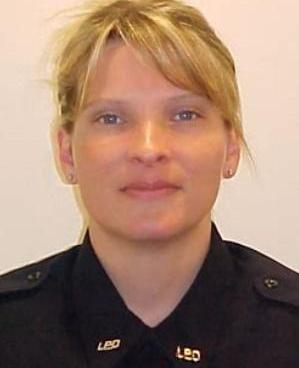
In the winter of 1986, 17-year-old Denise Sallee, known to her friends and family as "Denny," was working to find her path in Parkland, Washington. A high school dropout, she held a job at a fast-food restaurant in nearby Spanaway and also babysat. Her mother described her as smart, responsible, and a lover of music, choir, poetry, and the outdoors.
After spending the previous two years in Kodiak, Alaska, with her grandparents, where she had been a straight-A student, Denise had returned to Washington in the fall of 1985. The change in curriculum proved difficult, leading her to leave school, but she was making her own way.
On the evening of Friday, January 24, 1986, Denise went with a friend to the Paradise Village Bowl, a local bowling alley in Parkland. Her friend left at some point during the night, leaving Denise behind. She was seen in the company of a young man who introduced himself as "Tim." When Denise failed to return home or call her mother, she was reported missing the next day. Initially, authorities handled her case as a potential runaway, a common assumption at the time.
The hope that Denise had simply run away was shattered two months later. On March 26, a man cleaning a vacant lot discovered some of her clothing stuffed under a log. Three days later, on March 29, a seven-year-old boy searching for bottles in the woods behind his home made a devastating discovery: the partially buried, nude body of Denise Sallee. An autopsy would later confirm that the cause of death was strangulation. Her mother identified the clothing found earlier as belonging to her daughter.
The investigation into the young woman's murder began immediately. Detectives spoke with Denise's friend, who provided a description of the man named "Tim" she was last seen with, leading to the creation of a composite sketch. Investigators received several tips, with at least three naming a "Kim Burkhard" or similar misspellings of a local man's name, but with no solid leads, the trail went cold. For a time, detectives even considered a possible link to the Green River Killer, who was active in the region, but this was eventually ruled out. For years, Denise's case remained unsolved, leaving her family without answers and her killer free.
The case lay dormant for more than two decades until a cold case detective, Gene Miller, began re-examining unsolved Pierce County murders in 2009. Reviewing the files for Denise and another teen girl, Kimberly Payne, who was killed later in 1986 after also being seen at the Paradise Village Bowl, Miller noticed the name "Tim" and the various spellings of "Burkhart" in the old reports. Using software to search for similar-sounding names, he landed on Timothy Ray Burkhart. Burkhart, it turned out, had become a prime suspect in the 2001 murders of two other women, Kathryn Coates and Rebecca Nash.
Timothy Ray Burkhart, also known as Kim Burkhard, was a serial killer responsible for the murders of at least four women in Pierce County between 1986 and 2001. His methods included strangulation and bludgeoning. Shortly after being identified as a suspect in the 2001 killings, Burkhart took his own life on July 2, 2001, dying of a drug overdose before he could be arrested or tried. Evidence from the 2001 crime scenes definitively linked him to those murders.
Following Detective Miller's lead, investigators sought to connect Burkhart to the cold cases from 1986. In 2009, they submitted DNA evidence from the murders of Denise Sallee and Kimberly Payne to the national database, CODIS. The results were a match to Timothy Burkhart's DNA profile. After 23 years of uncertainty, Denise's killer was finally identified. Though he could never face a jury for his crimes, the DNA match officially closed her case, bringing a long-delayed measure of justice to her family.