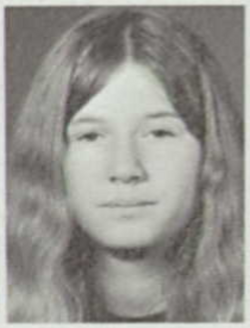
On the evening of Saturday, January 4, 1969, in Seattle, Washington, 21-year-old Mary Annabelle Bjornson was in her apartment preparing dinner for her boyfriend, Duane Thornton. A student at the University of Washington, Mary worked at the local Sears store in Ballard to help pay for her schooling. Her roommate was out of town, and the apartment was quiet as the meal cooked on the stove.
When Thornton arrived around 9:00 p.m., he found a disturbing scene: the food was still cooking, but Mary was gone. Her coat was missing, but her purse, cigarettes, and identification had all been left behind, signaling that she had not planned to be gone long. After a brief search, Thornton and a neighbor immediately contacted the police to report her missing.
Mary, a female, was born in Seattle in 1948 to Harold and Mildred Bjornson. Her disappearance marked the beginning of a terrifying period for the city, as another young woman, 20-year-old University of Washington junior Lynne Carol Tuski, vanished just weeks later on January 24 after leaving her job at a Sears in Shoreline. The community was on edge, unaware that Washington's first known serial killer was in their midst.
The break in the case came from an unrelated crime. In February 1969, Seattle police arrested John Dwight Canaday, a Vietnam War veteran, for the kidnapping and assault of another woman. Already a suspect in two rapes, Canaday was in custody when the body of Lynne Tuski was discovered on March 13 in a snowy area near Index, in Snohomish County. Faced with mounting evidence and police questioning, Canaday confessed in March. He admitted to killing both Lynne Tuski and Mary Bjornson.
In his confession, Canaday laid out the chilling details of Mary's final hours. He admitted he had knocked on her apartment door, using the ruse of car trouble to lure her outside. Once she was out of the apartment, he brandished a knife, forced her into his car, and drove her to Seattle's Seward Park. There, he raped and strangled her to death. After his confession, Canaday agreed to lead investigators to Mary's body, which he had hidden in the same remote, snow-covered area off a forest access road near Index where he had left Lynne Tuski.
Canaday was charged with three counts of first-degree murder, as well as attempted rape, rape, kidnapping, and assault. His third murder victim was 16-year-old Sandra Bowman, a pregnant newlywed he had brutally stabbed to death in her home in December 1968. That case remained a cold case for decades until DNA evidence conclusively linked Canaday to the crime in 2002, leading to his confession and a third life sentence in 2004.
For the murders of Mary Bjornson and Lynne Tuski, Canaday pleaded not guilty by reason of insanity. A jury deliberated for only two hours before finding him guilty on all counts. He was sentenced to be executed by hanging. However, his death sentence was commuted to life imprisonment in 1972 after the U.S. Supreme Court's ruling in *Furman v. Georgia* struck down the death penalty statutes in several states, including Washington. John Dwight Canaday was ultimately sentenced to three consecutive life sentences. He died of natural causes in his cell at Clallam Bay Prison on December 26, 2012, at the age of 68.