Crime Solvers Central
307 Cases Solved. Advancing justice for missing persons, unsolved homicides, unidentified and unclaimed remains.

Case Description

Any updates on this case? Let us know!
Summary based on 1 source
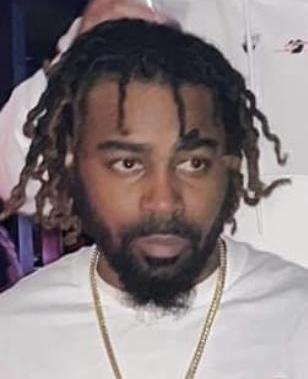
The last days of 2002 were drawing to a close in Boston, Massachusetts, a time typically filled with holiday gatherings and reflections on the year gone by. But for the family of Darrin Adams, it became a time of sudden and permanent loss. Darrin, a 32-year-old male, had his life violently cut short just three days before the new year, leaving behind questions that have lingered for more than two decades. Public records and memorials do not offer a detailed picture of Darrin’s life—his work, his family, his passions—a common and heartbreaking reality in older, unsolved cases where the focus remains locked on the last violent moments of a life, rather than the richness of the years that preceded them.

On the night of Saturday, December 28, 2002, the Boston Police Department received a call reporting a person shot at 150 American Legion Highway. The address is part of a major parkway that runs through several Boston neighborhoods, including Dorchester, Roslindale, and Mattapan, a long stretch of road lined with a mix of residential homes, apartment buildings, and commercial properties. When officers arrived at the scene, they found Darrin suffering from gunshot wounds. He was pronounced deceased, and the city recorded another homicide in a year marked by significant violence. The Office of the Chief Medical Examiner later conducted an autopsy and officially determined that Darrin Adams’s manner of death was homicide.

The investigation was launched immediately by the Boston Police Department's homicide detectives. They would have spent the initial hours and days canvassing the area around 150 American Legion Highway, searching for witnesses who might have seen or heard something unusual that night. The area is a busy thoroughfare, and investigators would have hoped that someone driving by or living nearby could provide a crucial piece of information—the description of a person or a vehicle, the sound of an argument, or the direction a suspect may have fled. Despite their efforts, the investigation did not lead to an arrest, and as days turned into weeks and then years, Darrin's case grew cold.

The year 2002 was a particularly violent one in Boston, with a significant spike in homicides compared to the years immediately before and after. Darrin’s death was one of the last of the year, a final tragic statistic in a period that strained police resources and left numerous families grieving. These older, unsolved cases present unique challenges for law enforcement. Over time, witnesses may move away or pass away, memories fade, and physical evidence can degrade. Yet, for the detectives in the Boston Police Department's Unsolved Homicide Unit, these cases are never forgotten. They remain open, waiting for the one phone call or the one technological advance that could break the silence.

Advances in forensic science, particularly in DNA analysis, have given new hope to solving cold cases from that era. Evidence collected from the scene in 2002, which may have been insufficient for testing at the time, could now potentially yield a genetic profile. Detectives periodically review these files, looking for new leads or opportunities to re-examine evidence with modern techniques. They rely heavily on the public's help, believing that someone, somewhere, knows what happened to Darrin Adams. Allegiances shift over time, and a person who was once afraid to come forward may now be in a position to share what they know without fear.

As of late 2026, the murder of Darrin Adams remains an open and active investigation within the Boston Police Department. There is no statute of limitations on murder, and detectives continue to seek justice for him and his family. The department urges anyone with information, no matter how insignificant it may seem, to come forward. The Boston Police Department’s Homicide Unit can be reached at (617) 343-4470. For those who wish to remain anonymous, tips can be submitted by calling the CrimeStoppers Tip Line at 1 (800) 494-TIPS or by texting the word 'TIP' to CRIME (27463).

Links to Additional Sources (1)

See any mistakes? Let us know!