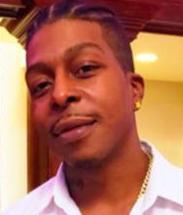
Antonio Facente, a 33-year-old Italian-born man, was found murdered on March 29, 1979, in Springfield, Massachusetts, in a killing that would become associated with allegations of organized crime and a possible revenge plot. His body was discovered inside the trunk of an abandoned automobile near the intersection of Portsmith and Sheffield Streets. He had suffered multiple gunshot wounds and was pronounced dead at the scene. Facente, originally from Locri in the Calabria region of southern Italy, had reportedly been missing since Saturday, March 24, when his wife last knew of his whereabouts. The discovery brought a tragic end to several days of uncertainty, but it also raised troubling questions about who had killed him and why.
Investigators were confronted with an execution-style killing, and the circumstances surrounding the discovery suggested that his body had been concealed and transported before being abandoned.
The condition of Facente's remains made the case particularly disturbing. Historical accounts based on Massachusetts State Police records described his body as bound and reported unusual, deliberately degrading treatment of his remains. According to those accounts, he was discovered wearing a diaper, with another reportedly placed inside a wound to his head. These details suggested that the killing involved more than a spontaneous confrontation, although the precise sequence of events leading to his death was never publicly established through a criminal trial. Contemporary reporting indicated that investigators initially had no confirmed motive, leaving open questions about whether the murder was connected to personal disputes, criminal associations, or events from Facente's past.
Facente's murder attracted particular attention because he had previously been at the center of one of Springfield's most controversial criminal prosecutions. On September 4, 1972, William Griffin, the owner of a Springfield liquor store, was shot and killed during an incident that prosecutors alleged involved a cocaine debt and an armed robbery. Facente and Eugene Graziano were arrested later that month and accused of involvement in Griffin's murder. Prosecutors relied heavily on the testimony of John Owens Jr., a federal narcotics informant who claimed that the defendants had discussed collecting thousands of dollars allegedly owed by Griffin. Facente and Graziano disputed the accusations and presented witnesses supporting their accounts of their whereabouts. Nevertheless, on February 2, 1973, both were convicted of second-degree murder and armed robbery and received life sentences.
The convictions became the subject of a lengthy legal battle. On July 19, 1975, the Massachusetts Supreme Judicial Court overturned the verdicts after determining that the defense had been improperly restricted from questioning the prosecution's principal witness about evidence that could have undermined his credibility and implicated him in the crime. The court also criticized inflammatory remarks made during the prosecution's closing argument, including references to organized crime stereotypes and the defendants' national origin. Facente and Graziano were eventually released on bail while awaiting another trial. On November 26, 1977, following a retrial, both were acquitted. The case had attracted considerable public attention, and Facente's legal struggle had placed him in direct conflict with Hampden County District Attorney Matthew J. Ryan.
That conflict would later become important to theories surrounding Facente's own murder. Investigators and journalists examining Springfield's organized crime history reported that tensions between Facente and Ryan had continued beyond the earlier prosecution. Subsequent accounts also described personal disagreements between them, although the precise nature of those disputes was never established in a criminal proceeding concerning Facente's death. Some later organized crime histories alleged that Facente had become romantically involved with Ryan's daughter and that the relationship created additional friction with influential individuals in Springfield's criminal underworld. Those allegations remain unproven and should not be treated as established facts or a confirmed motive.
As investigators examined Facente's killing, attention eventually turned toward Adolfo "Big Al" Bruno, a prominent figure associated with the Springfield faction of the Genovese crime family. Bruno would later rise to become one of the most powerful organized crime figures in western Massachusetts. According to retrospective reporting based on law enforcement information, Mafia informants told investigators that Bruno had boasted to associates about killing Facente. Those informants alleged that Bruno's involvement was intended, at least partly, to gain favor with District Attorney Ryan. The accusation was significant because it suggested that Facente's killing might have involved both organized crime interests and unresolved personal hostilities. However, the informants' statements were allegations, not judicial findings, and Bruno was never convicted or even charged in connection with the murder.
Later accounts of Springfield's Mafia history offered a more elaborate, but unverified, description of how the killing may have occurred. One such account alleged that Facente was deceived into attending a meeting after being led to believe he was receiving recognition within the criminal organization. According to that version, he was taken to the basement of the Our Lady of Mount Carmel Club, where Anthony "Bates" DeLevo and John "Jake" Nettis allegedly assaulted him before Bruno shot him. The same account identified Felix Tranghese as having allegedly participated in transporting the body afterward. These details were never established through a trial and are not confirmed by the public account maintained by prosecutors. They remain allegations rather than a verified reconstruction of the murder.
The possible involvement of Springfield's organized crime hierarchy added another layer of difficulty to the investigation. During the late 1970s, the region's Mafia operations were influenced by Salvatore "Big Nose Sam" Cufari and Francesco "Skyball" Scibelli, whose associates controlled illegal gambling and other criminal enterprises. Facente's previous legal troubles, reported underworld associations, and confrontations with influential individuals created several possible avenues for investigators to examine. Nevertheless, the existence of those connections did not establish who ordered the killing, who physically carried it out, or whether the murder had been authorized by a criminal organization.
Despite the allegations surrounding Bruno and other reputed organized crime associates, no publicly documented arrest, murder charge, trial, or conviction has resolved Facente's death. Later reporting indicated that investigative materials containing statements from Mafia informants had remained sealed in Hampden County Superior Court, limiting public access to potentially important information. Bruno continued his involvement in organized crime for decades and eventually became the leader of Springfield's Genovese faction. On November 23, 2003, he was himself murdered in an organized crime assassination in Springfield. His death eliminated any possibility that he would personally face future prosecution for Facente's killing, although his alleged involvement had never been proved.
The Hampden District Attorney's Office continues to identify Antonio Facente's murder as an unresolved homicide. The official record establishes that his body was discovered on March 29, 1979, inside an abandoned vehicle and that he died from multiple gunshot wounds. It does not publicly establish the exact time of his death, the number of attackers, or a confirmed motive. The Springfield Police Detective Bureau remains the agency designated to receive information concerning the case and can be contacted at 413-787-6355.
Decades after the discovery of his body, Facente's death remains one of the troubling unsolved killings from Springfield's organized crime era. What began with a disappearance in late March 1979 became a homicide investigation entangled with a controversial earlier murder trial, allegations of personal retaliation, and accounts from Mafia informants. Although investigators developed information pointing toward possible suspects, the available public record has never produced a definitive legal determination of responsibility. Facente's murder remains unresolved, with the circumstances of his final days and the identities of those responsible still awaiting conclusive answers.