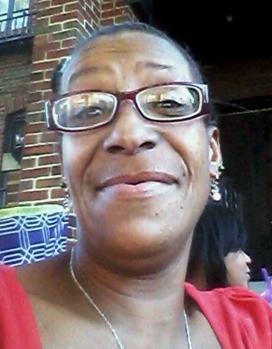
More than three decades have passed, yet the story of Mokeia Wright remains a collection of unanswered questions. She was a woman whose life ended tragically and anonymously in the summer of 1992, leaving behind only the barest of facts for investigators and a lingering sense of loss for those who may have known her. Who she was—her dreams, her passions, her family, her daily life—is a void that investigators hope someone, somewhere, can help fill.
On Wednesday, July 29, 1992, the body of Mokeia, a female whose age and race were not publicly recorded, was discovered inside a vacant house in St. Louis, Missouri. The location was in the 3900 block of West Belle Place, a street in the city's Vandeventer neighborhood. In that era, the neighborhood, with its mix of historic homes and commercial corridors, was grappling with many of the urban challenges common across the country.
The discovery inside the abandoned property marked the beginning of a homicide investigation that would soon grow cold, leaving a permanent shadow over the community.
The St. Louis Metropolitan Police Department responded to the scene, but details of the initial investigation have remained scarce over the years. Police have not publicly released information about the cause of death, the condition in which Mokeia was found, or what evidence, if any, was collected from the vacant house. Without witnesses stepping forward or forensic technology providing a clear direction, the case stalled. For years, Mokeia's name was added to a long and somber list of the city's unsolved homicides, a testament to the fact that as time passes, the path to justice grows more difficult to navigate.
The silence surrounding Mokeia Wright's case lasted for more than thirty years. Generations of detectives cycled through the homicide division, and the file, like so many others, gathered dust. The lack of public information left a vacuum, making it impossible for the community to know the full tragedy of her death. There were no public vigils reported, no family statements shared in the media, and no anniversaries marked by calls for justice. The memory of the woman found on West Belle Place seemed to fade into the city's history.
However, in the fall of 2026, a new effort brought Mokeia's case back into the light. The Missouri Attorney General's Office, in partnership with state and local law enforcement, launched a new series of cold case playing cards. These cards, distributed in correctional facilities across the state, feature unsolved homicides and missing persons cases in the hope that an inmate with knowledge of a crime might come forward. Mokeia Wright is the Red 10 of Hearts. This initiative represents a renewed commitment to finding answers for victims and their families, no matter how much time has passed.
As of October 2026, the investigation into the murder of Mokeia Wright remains open with the St. Louis Metropolitan Police Department's Homicide Division. Detectives are hopeful that the playing card initiative or renewed public interest will finally generate the lead they have been waiting for. Anyone with information about Mokeia Wright, no matter how insignificant it may seem, is encouraged to contact the SLMPD Homicide Division at 314-444-5371. Anonymous tips can be made to CrimeStoppers at 866-371-TIPS (8477).