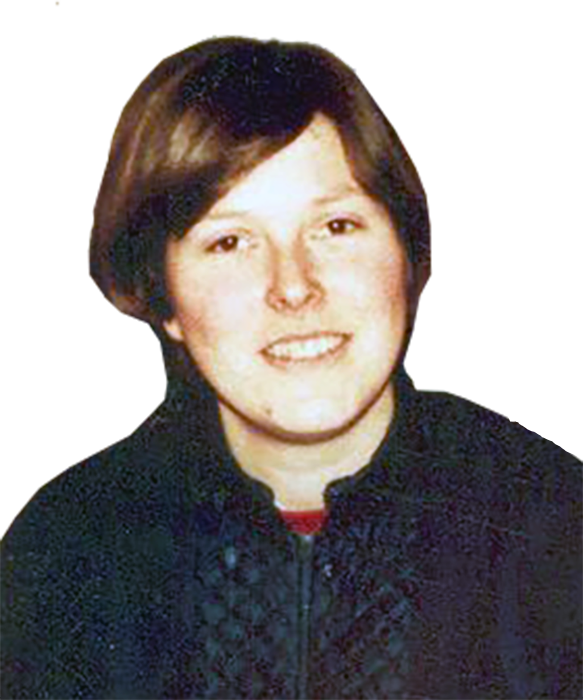
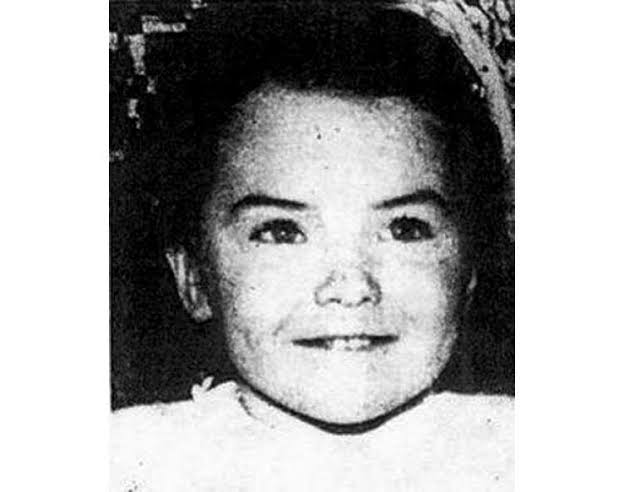
In the quiet city of Chatham, Ontario, a place where neighbors knew each other and doors were often left unlocked, a brutal act of violence shattered the community's sense of security. Isobella “Belva” Russell, a 57-year-old woman known for her work as a chambermaid at the Merrill Hotel, became the final victim of a man who preyed on women like her.
Her life was cut short on January 23, 1971, leaving a void in the lives of her family and forever linking her name to one of Southwestern Ontario's most notorious serial killers.
On the evening of January 22, 1971, Belva finished her shift and spent some time at the Merrill Hotel's bar before heading home. She lived in an apartment on Adelaide Street South with her common-law husband, Reginald Tomlinson. In the early hours of the next morning, around 2:00 a.m., Tomlinson returned home. As he entered his apartment building, he passed an unfamiliar man who was hastily exiting. Moments later, Tomlinson made a horrific discovery: Belva was in their apartment, severely beaten and clinging to life. She died from her injuries shortly after. An autopsy would later reveal she had suffered massive head injuries and that the assailant had attempted to rape her.
The investigation into Belva's murder moved swiftly. Within weeks, Chatham police detectives zeroed in on a suspect: Gerald Thomas Archer. Archer, who had a criminal record dating back to 1950, had moved to Chatham with his wife just a few months prior, in October 1970. He was brought in for questioning on February 12, 1971, and was subsequently arrested and charged with non-capital murder in Belva's death. A jury found him guilty on June 17, 1971, and he was handed a mandatory life sentence with the possibility of parole. As he was led from the courtroom, Archer ominously remarked to his wife, "That's not the end of the ball game. That's just the first strike."
For years, the full scope of Archer's violent spree remained unknown to authorities. His murder of Belva Russell bore striking similarities to two other unsolved homicides in the region. Jane Wooley, a 62-year-old chambermaid in London, Ontario, was beaten and stabbed to death in her apartment on January 31, 1969. On September 4, 1970, Edith Authier, a 57-year-old chambermaid from Merlin, was also beaten and stabbed to death in her home. All three women were of a similar age, worked as hotel maids, and were attacked in their residences. This pattern led to Archer being dubbed "The London Chambermaid Slayer."
Despite the clear connections, Archer was only ever convicted for the murder of Belva Russell. He was granted parole in 1985 after serving just 14 years of his life sentence. For the next decade, he lived as a drifter, frequenting cheap hotels and bars. Archer died of a heart attack in 1995, and his unclaimed body was buried in a potter's field. The full truth of his crimes might have been buried with him, but his family came forward five years after his death with a dark secret.
Archer's estranged wife and daughter informed police that he had once drunkenly confessed to killing Edith Authier. This new information prompted investigators to exhume Archer's remains in February 2000 to obtain a DNA sample. The DNA was a match to evidence, including cigarette butts, found at the scene of Jane Wooley's murder. The posthumous DNA match definitively linked Archer to all three killings, confirming he was the serial killer who had terrorized the region between 1969 and 1971.
Belva Russell was survived by her two daughters, four sons, and her estranged first husband, George. Her tragic death was not an isolated incident but the final act of a predator who had evaded full responsibility for his crimes during his lifetime. While justice for Jane Wooley and Edith Authier came decades later, it was the investigation into Belva's murder that first put a stop to the "Chambermaid Slayer," though the true extent of his evil would not be understood for many years to come.