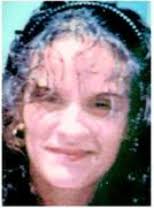
Dinelia Torres, a 33-year-old mother of three known to her friends and family as "Dini," was remembered for a personality that could light up any room she entered. Funny and kind, she had worked as a hairdresser and in construction and shared close bonds with her many friends. Her family described her as a "good girl" who, despite her warm spirit, fell into a downward spiral after becoming addicted to heroin.
Her life took a tragic turn, entangling her fate with one of central Massachusetts' most haunting unsolved serial killer cases.
In August of 2003, Dinelia was last seen in the Framingham, Massachusetts area. As the weeks turned into months with no word, her family grew increasingly worried. A relative officially reported her missing to the Worcester Police on November 1, 2003. The search for Dinelia would stretch through the cold New England winter, ending in the way her loved ones had feared most. On the morning of March 3, 2004, a contractor clearing brush alongside a road in Hudson, Massachusetts, not far from Interstate 495, made a grim discovery: a set of human remains.
The remains were skeletal, indicating they had been there for some time, exposed to the elements. The body was found wearing a grey and white t-shirt. Due to the condition of the remains, determining a cause of death was impossible. Just one day after the discovery, authorities were able to positively identify the remains as those of Dinelia Torres. She was estimated to have been left in that wooded spot three to nine months before she was found.
The discovery of Dinelia's body proved to be a pivotal moment for investigators. Her case was quickly linked to two other women whose skeletal remains had been found in nearby Marlborough just months earlier, in September 2003. Those victims, Carmen Rudy, 29, and Betzaida Montalvo, 29, also had ties to Worcester and shared similar life struggles with Dinelia. With the third victim found in a similar manner in a wooded area, police began to operate on the theory that a serial killer, whom they dubbed the "Main South Woodsman," was preying on vulnerable women from Worcester's Main South neighborhood.
The Main South Woodsman is believed to be responsible for the deaths of at least three women, with as many as five suspected victims between 2002 and 2007. The victims were all petite, Hispanic women who battled drug addiction. The killer would pick them up in the Main South area and dump their bodies in wooded, secluded locations in surrounding towns. A criminal profile developed in 2007 suggested the killer was likely a blue-collar worker with a history of abuse, a resentment toward women, and an outdoorsman's knowledge of the local terrain.
Years after Dinelia's death, authorities identified a person of interest in the Main South Woodsman killings. Alex Scesny, a man with a history of sexual violence, was named publicly. Scesny was convicted and sentenced to life in prison for the 1996 murder of another woman, Theresa Stone. His family owned property near where some of the victims' remains were discovered. However, despite the suspicion, Scesny has never been charged in connection with the death of Dinelia Torres or any of the other Woodsman victims.
The murder of Dinelia Torres remains officially unsolved, a cold case that has left a family without answers and a community with lingering fear. Her death, along with the others, highlights the tragic vulnerability of women on the fringes of society. For those who knew and loved "Dini," the memory of her bright smile and funny disposition is now forever shadowed by the brutal, unanswered questions of her final days. The investigation into her homicide is still open.