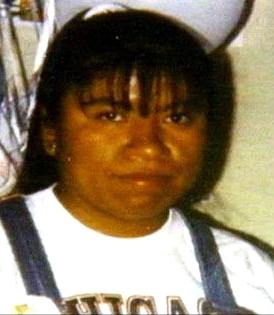
Tarika Jones was a 30-year-old African American woman whose life was tragically cut short in Chicago, Illinois, on May 20, 2003. Her body was discovered inside an abandoned building in the city's North Lawndale neighborhood, and investigators determined that she had been strangled to death. Her killing would eventually become part of a much larger investigation involving dozens of women murdered under similar circumstances across Chicago.
What initially appeared to be another isolated homicide became one of the cases raising troubling questions about whether a serial killer, or possibly multiple killers, had been targeting vulnerable women throughout the city.
The discovery of Tarika's body on May 20, 2003, was especially disturbing because another woman, Linda Green, was found murdered that same day. Green's body was discovered in an alley in the Greater Grand Crossing neighborhood, approximately eight miles from where Tarika was found. Both women had died from strangulation. Although the two crime scenes were geographically separated, the similarities between the deaths and the timing of the discoveries would eventually attract the attention of investigators and researchers examining patterns in Chicago's unsolved homicides. No publicly established evidence has conclusively demonstrated that the same individual murdered both women.
The circumstances surrounding Tarika's final hours remain largely unknown. Publicly available accounts do not establish where she was last seen alive, whom she might have encountered before her death, or how she came to be inside the abandoned building. Information concerning potential witnesses, forensic evidence collected at the scene, and any personal belongings recovered has not been widely disclosed. These unanswered questions have made it difficult to reconstruct the sequence of events leading to her murder.
Tarika's killing occurred during a particularly troubling period in Chicago's history. Between 2001 and 2018, dozens of women were found strangled or asphyxiated in abandoned buildings, vacant lots, alleys, and garbage containers throughout the city. Many of the victims were discovered in isolated or neglected locations, sometimes with evidence suggesting sexual violence. The similarities among these deaths would eventually raise concerns that some of the murders might be connected, although investigators have not established that every case involved the same perpetrator.
The year 2003 was especially alarming. Eight women whose deaths were later included in the suspected pattern were discovered murdered that year. Nancy Walker was found in March, followed by Tarika Jones and Linda Green in May. Rosenda Barocio and LaTonya Keeler were discovered in August, while Latricia Hall and Lucyset Thomas were found on the same day in October. Ethel Amerson was discovered in December. The repeated occurrence of strangulation deaths, sometimes within days of one another, became an important part of the broader examination of whether someone was systematically targeting women in Chicago.
Years after Tarika's death, the nonprofit Murder Accountability Project began examining homicide records using statistical analysis to identify possible connections between unsolved killings. Its research identified 51 women whose deaths shared characteristics suggesting that at least some of the murders could be linked. Tarika was included among those victims. The organization highlighted similarities involving the methods of killing, locations where bodies were discovered, and the apparent vulnerability of some of the victims. Its findings generated renewed public attention and increased pressure on authorities to investigate the possibility of an unidentified serial murderer.
The suspected series became widely associated with the name "Chicago Strangler," although that designation does not establish that one individual committed all the murders. Thomas Hargrove, the founder of the Murder Accountability Project, argued that the pattern warranted serious consideration of a serial offender. Chicago police, however, emphasized that similarities between homicides did not necessarily prove a common perpetrator. Investigators had to consider the possibility of multiple unrelated offenders, individual domestic or personal disputes, and other circumstances that could produce superficially similar crime scenes.
In 2019, Chicago authorities began an extensive review of the 51 cases, examining available evidence for potential forensic connections. The renewed investigative attention included DNA analysis intended to determine whether biological evidence from different crime scenes could identify common suspects. The investigation represented an opportunity to revisit older homicides using forensic techniques that had advanced significantly since the original deaths.
By November 2020, Chicago police confirmed that DNA evidence from 21 of the reviewed cases had been analyzed. None of those samples matched one another, and none matched identified offenders in the FBI's criminal DNA database. Those findings complicated the theory that a single serial killer was responsible for the entire group of murders. However, the absence of matching DNA did not definitively eliminate the possibility that some cases were connected. The publicly reported results also did not establish whether usable DNA evidence had been recovered specifically from the scene of Tarika's murder.
The investigation raised broader questions about how homicide cases involving marginalized women were handled and whether similarities between separate killings had been recognized quickly enough. Families of victims and community advocates expressed frustration over the years of unanswered questions. Some believed that greater investigative attention might have uncovered connections earlier, while others emphasized the need for authorities to treat each victim as an individual whose death deserved a thorough investigation regardless of personal circumstances.
In Tarika's case, publicly available information remains limited regarding potential suspects. No individual has been publicly identified as her confirmed killer, and available reporting does not document an arrest, criminal charges, trial, or conviction specifically connected to her death. Although the broader investigation generated theories about one or more serial offenders, those theories have not resulted in a publicly documented prosecution that resolves her murder. No verified public information establishes a definitive motive or identifies someone who was with her immediately before she died.
The lack of a named suspect also means that important aspects of Tarika's death remain unresolved. Investigators have not publicly established whether she knew her attacker, whether she was killed inside the abandoned building where she was discovered, or whether her body was moved there after the crime. The available information does not establish whether the perpetrator selected that location deliberately or whether it was simply where the fatal encounter occurred.
More than two decades after Tarika was found, her case remains a reminder of the many Chicago homicide victims whose families have been left without definitive answers. The broader investigation into the suspected strangulation killings brought renewed attention to her name, but it has not publicly established who was responsible for taking her life. Her death remains important not only because of its possible connection to other unsolved homicides, but because it represents an individual life lost to violence and a crime that has yet to receive a publicly documented resolution.
Tarika Jones should be remembered as more than a name on a list of suspected serial murder victims. She was a person whose life ended under violent circumstances, leaving fundamental questions about her final moments unanswered. Until credible evidence identifies the person responsible and establishes what happened inside or around that abandoned Chicago building, her murder remains an unresolved chapter in the city's history of violence against women.