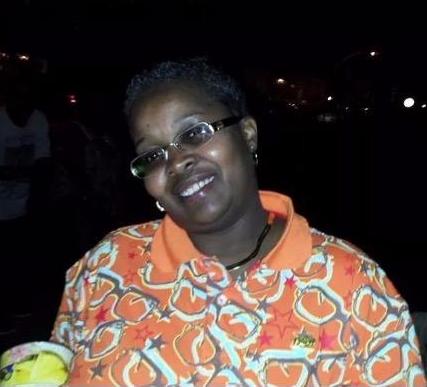
On a summer day in Chicago, the life of Lorraine Harris, a 36-year-old woman, came to a brutal and silent end. On Sunday, August 25, 2002, her body was discovered in a dead-end alley at 5059 N. Ridgeway Avenue. She had been strangled. Her death was not an isolated tragedy but part of a horrifying pattern of violence that haunted the city for nearly two decades, a series of killings attributed to a possible serial killer, or killers, dubbed the Chicago Strangler.
Lorraine’s case is one
of 51 unsolved homicides of women in Chicago that occurred between 2001 and 2018. This cluster of murders was identified by the Murder Accountability Project, a nonprofit organization that analyzes homicide data to find patterns that may indicate serial killings. The victims in this series were predominantly Black women, but Lorraine, who was white, and at least one other victim, show that the killer or killers may have crossed racial lines. The methods were chillingly consistent: strangulation or asphyxiation. The bodies of these women were often left in desolate, overlooked places—alleys, abandoned buildings, garbage cans, and vacant lots, primarily on the city's South and West Sides.
The investigation into this string of murders has been complex and frustrating for both law enforcement and the victims' families. While activists and organizations like the Murder Accountability Project see a clear pattern pointing to one or more serial predators, the Chicago Police Department has historically been hesitant to officially link the cases or confirm the existence of a single "Chicago Strangler." In 2019, facing public pressure, the department announced it would review the 51 unsolved cases, looking for new leads with modern technology. However, officials have also stated that they have not found definitive evidence, such as matching DNA, to connect all the murders to one individual.
The series of killings has left a long trail of grief and unanswered questions. The victims were mothers, daughters, and sisters, whose lives were cut short. Many of them lived on the margins of society, struggling with addiction or poverty, which may have made them more vulnerable. Their stories were often overlooked, their cases growing cold with the passage of time. Community activists and journalists have worked to keep their memories alive, ensuring they are not forgotten and continuing to press for justice. They are sometimes referred to as "The Unforgotten 51."
For Lorraine Harris, justice remains elusive. Her death occurred during a particularly grim period, just eleven days after another young woman, 19-year-old Jody Grissom, was also found strangled in a Chicago alley. Like so many of the others, Lorraine's case remains open and unsolved. There have been no arrests, and no suspects have been publicly named in her murder. Her name is etched on a list of victims, a somber reminder of a predator who moved through the city's shadows with impunity.
More than two decades have passed since Lorraine Harris was killed, but the search for answers continues. Her case, along with the 50 others, represents a dark chapter in Chicago's history and a collective call for justice that has yet to be fully answered. For the families and communities affected, the hope is that one day, the person or people responsible for these heinous crimes will be brought to light, and the stories of women like Lorraine will finally have an ending that includes accountability.