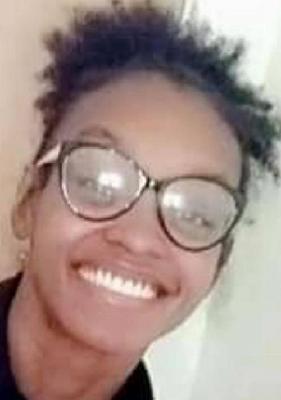
On a cold Saturday in Chicago, February 16, 2002, the life of Bessie Scott, a 43-year-old Black woman, ended in a place of abandonment and silence. Her body was discovered inside a derelict building in the city’s Back of the Yards neighborhood. The structure, once a beauty salon, held no beauty that day, only the grim evidence of a brutal crime. An autopsy would later confirm that Bessie had been strangled to death.
Details about Bessie’s life—who she loved, what she dreamed of,
and the path she walked—are lost to the passage of time and the scarcity of public records. Known by some as Bessie Coleman, she was a daughter, and perhaps a sister or a mother, but the voices of those who knew her have not been heard in the public narrative of her death. Her story is told not through the memories of loved ones, but through the cold, hard facts of her final moments and the disturbing pattern her murder fit into.
Bessie’s death was not an isolated incident. Her case is one of at least 51 unsolved homicides of women in Chicago between 2001 and 2018 that have struck a chord of fear in the city. The victims, predominantly Black women, were often found in alleys, vacant lots, garbage cans, and abandoned buildings on the South and West Sides. The cause of death in nearly all these cases was strangulation or asphyxiation, a method that points to a chillingly personal and violent encounter.
This series of killings has led to the theory of the "Chicago Strangler," a possible serial killer or killers preying on vulnerable women. The Murder Accountability Project, a nonprofit organization that analyzes homicide data, identified this cluster of 51 unsolved cases, including Bessie’s, using a computer algorithm to detect patterns. They have pointed to the similarities in victimology, cause of death, and the disposal of the bodies as a strong indication of a serial predator. Bessie’s case fits this pattern, a single piece in a much larger and more terrifying puzzle.
The location where Bessie was found is also significant. Her body was discovered in a geographic cluster with two other victims, Judith Wilson and Mary Ann Szatkowski, whose bodies were found within a thousand feet of each other in the same Back of the Yards neighborhood over the span of five years. This clustering of victims has fueled speculation that a killer might be operating in specific, familiar territories.
In response to pressure from activists and the findings of the Murder Accountability Project, the Chicago Police Department has reviewed the 51 cases. However, they have stated that they have not found definitive DNA evidence to link all, or even a majority, of the murders to a single individual. While some of the cases have been closed with the arrest of different suspects, Bessie Scott’s murder remains unsolved.
More than two decades have passed since Bessie Scott was killed. Her case remains open, a cold file in a city with too many unsolved deaths. With no suspect identified and no justice served, her memory is left in the shadow of a frightening phenomenon. She is one of the "unforgotten 51," a name on a list that represents a deep and painful wound in the heart of Chicago, a reminder of the women whose lives were stolen and whose killer, or killers, may still walk free.