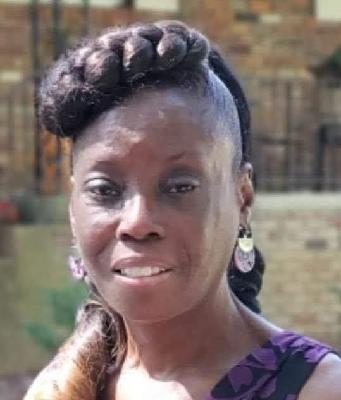
Valerie Ector, a 46-year-old woman, was born on February 12, 1965, in Tunica County, Mississippi. Her life was marked by early hardship; after her mother died of heart problems at age 37, 11-year-old Valerie and her siblings moved to Memphis to live with their great-grandmother. Her sister, Bonanza Keyes-Pollard, recalled their great-grandmother as a strict woman who taught them right from wrong.
As a teenager at Tunica's Rosa Fort High School, Valerie began to get into trouble and fell in with a "wrong crowd," her sister said. She eventually dropped out of school in the 11th grade, moved to Chicago for a time, and then returned to the Memphis area in the late 1980s.
For much of her adult life, Valerie struggled with drug addiction and lived on the streets of Memphis. Her life was a cycle of odd jobs, minor arrests for offenses like prostitution and drug possession, and attempts at rehabilitation. Despite her difficult circumstances, her sister remembered her with love. A few weeks before her death, Valerie made another attempt to get clean, but it didn't last. She called her sister on the Monday before she was killed, and they made plans to see each other that coming weekend. It was a visit that would never happen.
On the morning of Thursday, August 4, 2011, an employee at a business at 55 N. Third Street in downtown Memphis discovered a horrifying scene. Ann Miller saw a trail of blood in a parking lot that led to a pair of blankets next to a fence. "I just saw all the blood and the blankets and saw her feet sticking from under the blankets," Miller later recalled. Beneath the blankets was the body of Valerie Ector. She had been brutally murdered, her head bludgeoned at least twice with a concrete block, fracturing her skull and breaking her jaw. Her body, naked from the waist down, had been dragged more than 100 feet across the parking lot and left by the fence.
The initial investigation, led by Memphis Police Detective Joe Stark, was met with few immediate leads. It was a vicious killing, and Stark believed the size of the concrete block used meant Valerie was likely asleep or unconscious when attacked. What detectives didn't know at the time was that Valerie was the second murder victim of a serial killer who had been preying on vulnerable women in Memphis for over a decade. His name was Michael Mullins, and he had murdered his first victim, Beatrice Marie Cole, in 1999. He also brutally attacked and raped Jessie Lee Maples in Knoxville in 2008, an assault she survived.
The key to solving the case came nearly a year after Valerie's death. On June 6, 2012, Mullins killed his final victim, 67-year-old Gwendolyn Jackson, in downtown Memphis, using a brick. Investigators at that scene discovered fingerprints on a paper bag near the body, which led them to Michael Mullins. His DNA was already in the national database from the 2008 attack in Knoxville. This crucial link allowed police to connect Mullins not only to Jackson's murder but also to the murders of Valerie Ector and Beatrice Cole. The method was chillingly similar in each case: bludgeoning, rape, and covering the victim's body with a blanket.
After his arrest, Michael Mullins confessed in detail to the three murders and the Knoxville attack. On December 5, 2014, he pleaded guilty to three counts of first-degree murder and multiple counts of aggravated rape. He was sentenced to three life sentences without the possibility of parole. The following year, he received an additional 50 years for the attempted murder and rape of Jessie Lee Maples. The series of brutal, seemingly random attacks that had haunted Memphis and Knoxville for 13 years was finally over. For Valerie's family, the resolution brought a painful end to a life of struggle. Her sister held a closed-casket service and buried her in an unmarked grave in the Shady Grove Cemetery, just miles from her sister's home. "Regardless of whatever life she lived, she was still my sister and I loved her," Keyes-Pollard said.