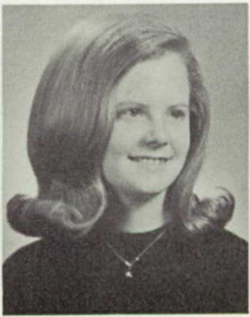
A vibrant 32-year-old woman on vacation, Lorraine Anne Barrett had traveled from her home in Bridgeville, Pennsylvania, to enjoy the sun and sand of Fort Lauderdale, Florida. Remembered as a generous and smiling person, she checked into the Days Inn Lauderdale Surf Motel on Seabreeze Boulevard on the last day of May 1991, looking forward to a few days of relaxation. Her trip, however, was cut tragically short in a brutal act of violence that would remain a mystery for more than a decade.
On the evening of May 31, Lorraine, also known as Lori, visited the popular Elbo Room bar, a landmark at the corner of Las Olas Boulevard and A1A. Witnesses later recalled seeing her there in the company of a man with distinctive tattoos. She was seen with the same man entering an elevator at her motel later that night. The following day, around noon on June 1, 1991, a cleaning lady entered Lorraine’s eighth-floor room, number 824, and made a horrifying discovery.
Lorraine's body was found in the room; she had been raped and strangled to death. The Broward County Medical Examiner's Office ruled her death a homicide by asphyxiation.
Fort Lauderdale homicide detectives began an immediate investigation. They collected evidence from the motel room and interviewed witnesses who had seen Lorraine at the bar. A composite sketch of the heavily tattooed suspect was created and distributed, but with few other leads, the case eventually went cold. For years, Lorraine’s killer remained a ghost, his identity unknown, leaving her family with unanswered questions and a profound sense of loss. The vibrant woman who had sought a simple vacation had become another unsolved statistic in a busy tourist city.
The case lay dormant until 2002, when Detective John Curcio of the Fort Lauderdale Police Department reopened the investigation. By this time, advancements in forensic science offered a new path to justice. DNA evidence collected from the crime scene in 1991 was submitted to the national DNA database, CODIS. In March 2003, a breakthrough came: the DNA matched an inmate on death row in Arkansas. The man was Jack Harold Jones Jr., a serial killer from Ohio. At the time of the DNA match, Jones was already condemned for the brutal 1995 rape and murder of Mary Phillips, 34, and the attempted capital murder of her 11-year-old daughter, Lacey, in Bald Knob, Arkansas.
The physical description of Jones, including his multiple tattoos, matched the descriptions provided by witnesses in Fort Lauderdale back in 1991. In 2005, Jones was extradited from Arkansas to Florida to face charges for Lorraine’s murder. He pleaded guilty to first-degree murder and was sentenced to life in prison. He was then returned to Arkansas's death row to await his previously scheduled execution. One of Lorraine's sisters, frustrated by the long appeals process, wrote in an online forum in 2007, “Let's stop playing games and get busy with this execution!”
Jack Harold Jones Jr. was executed by lethal injection at the Cummins Unit in Arkansas on April 24, 2017; he was 52 years old. His execution was part of a double execution, the first in the United States in 17 years. After his death, Jones was definitively linked to a third murder. A letter he had given his sister, with instructions to open it a year after his death, contained a confession to the 1983 killing of 20-year-old college student Regina Harrison in Hollywood, Florida. DNA evidence later confirmed his confession, solidifying his status as a serial killer responsible for the deaths of at least three women between 1983 and 1995.