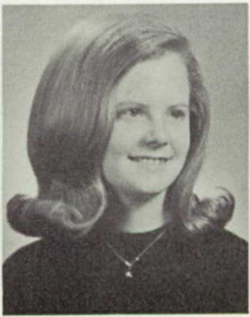
In the sun-drenched, humid summer of 1973, a shadow fell over Fort Lauderdale, Florida, beginning with the tragic death of Jonina Gudjonsdottir Kelpien, a 42-year-old woman from Iceland. A mother of three, Jonina was a cherished member of the local Icelandic expatriate community, building a life far from her native home. Her warmth and presence were extinguished in an act of brutal violence that would mark the beginning of a reign of terror by a serial killer who haunted the suburbs of Broward
County.
The night of July 14, 1973, was the last time Jonina was seen alive. After spending time with friends, she was spotted at a convenience store around 3 a.m. Earlier in the evening, she had a telephone argument with her husband, Theodore, about her drinking. When she arrived at her home on Pelican Isle, she found herself locked out, with the inside chain fastened. What happened next occurred in the terrifying quiet of the suburban night. Jonina was attacked in her own white Cadillac, parked in the driveway. The assailant raped her and strangled her from behind with a mustard-gold, men's stretch-knee sock.
The following morning, July 15, a man walking his dog about a mile from Jonina’s home discovered a horrifying scene. A trail of women's clothing led into a wooded yard, where Jonina’s body was found. Nearby, her Cadillac was parked, its interior showing signs of a struggle. In the backseat, her beloved cocker spaniel, Sponge, was found physically unharmed, a silent witness to the horror that had unfolded. Her purse was missing, the only thing taken from the scene.
The murder of Jonina Kelpien marked the first known victim of a predator the press would soon dub the "Gold Sock Killer" or the "Sock Strangler." The killer’s unusual and chilling signature was the use of men's socks as a ligature. Over the next six weeks, panic gripped the community as the killer struck again, murdering 17-year-old Teresa Ann Williams and 16-year-old Marisue Curtis, both also strangled with socks. Another young woman was attacked in her apartment by an intruder wielding a gold sock but managed to fight him off and survive, providing police with a description of the assailant.
The Fort Lauderdale Police Department launched a massive investigation, questioning over 200 people and administering dozens of polygraph tests, but the killer remained elusive. The attacks abruptly stopped in late August 1973. A break seemed to come in February 1974 with the murder of another woman, Ann Raub Newman, who was raped and strangled with a scarf. A fingerprint from that scene led police to a 19-year-old construction worker named Gary Jay Matus, who matched the description given by the lone survivor of the sock strangler.
Though police and the press heavily linked Matus to the Gold Sock killings, and Jonina's husband attended his court proceedings, prosecutors lacked the physical evidence to formally charge him with the murders of Jonina, Teresa, or Marisue. Matus was convicted for the murder of Ann Newman and received a lengthy prison sentence, but the Gold Sock Killer was never officially brought to justice. The case grew cold, leaving a legacy of fear and unanswered questions in South Florida. More than five decades later, the murder of Jonina Gudjonsdottir Kelpien remains officially unsolved, a somber chapter in the history of a community once paralyzed by a killer who vanished as quickly as he appeared.