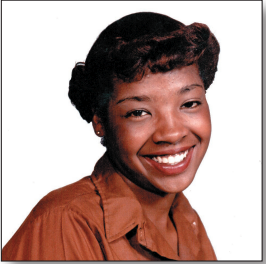
In the winter of 1939, a 34-year-old woman named Josephine Robinson was murdered in Washington, D.C. Her death on December 1st of that year would eventually be understood not as an isolated act of violence, but as a chapter in a terrifying story of a serial killer who stalked the nation's capital. While the tragic circumstances of her death are documented, the personal story of Josephine, a female victim of a brutal crime, has been largely lost to history, overshadowed by the notoriety of her
killer.
Josephine's life is not one detailed in historical records available to the public. What is known is that on the first day of December, she became the second known murder victim of Jarvis Theodore Roosevelt Catoe. After his first killing in 1935, Catoe had seemingly laid dormant for four years before he crossed paths with Josephine and took her life by strangulation, his signature method. Her murder marked a grim escalation in a series of attacks that would continue to terrorize the city for two more years.
The man responsible for Josephine's death was a predator who came to be known as "The D.C. Strangler." Born in South Carolina in 1904, Jarvis Catoe had moved to Washington, D.C., in 1929. He worked various jobs, including handyman and part-time taxi driver, which he sometimes used to find his victims. His criminal record began with arrests for indecent exposure in 1935. Those who knew him noted a significant change in his behavior after a head injury in 1925, years before his violent spree began.
For years, Catoe's crimes went unconnected. After killing Josephine Robinson, he murdered Lucy Kidwell in September 1940 and Mattie Steward just two months later. Ada Puller was killed in January 1941. These initial victims were all Black women, and their cases tragically attracted little public attention or widespread alarm. The pattern of violence only began to cause a public outcry and intense police focus when Catoe started targeting white women. Rose Abramovitz, a newlywed, was murdered in March 1941, followed by Jesse Strieff, a War Department secretary, in June of that year.
The investigation into the string of unsolved strangulations finally broke in August 1941, not in D.C., but in New York City. After murdering a waitress named Evelyn Anderson, Catoe stole her watch and gave it to a friend. The watch was eventually pawned, and diligent police work by the NYPD traced the item back through several hands to Catoe, who had since returned to Washington. Alerted by New York authorities, D.C. police arrested him on August 29, 1941.
Faced with the evidence of the pawned watch, Catoe confessed. He admitted to the murder in New York and then stunned investigators by confessing to a string of other killings in Washington, D.C. He ultimately admitted to eight murders, though he once vaguely claimed the total was "about ten." His confession solved the murder of Josephine Robinson and several other women, bringing a name to the fear that had been quietly building in the city. He also confessed to the 1935 murder of Florence Dancy, a crime for which another man had been wrongfully convicted and was serving a life sentence.
Jarvis Catoe was brought to trial in October 1941 for the murder of Rose Abramovitz. He attempted to recant his detailed confessions, claiming they were coerced while he was "sick and weak." The jury was unconvinced, deliberating for less than 20 minutes before finding him guilty of first-degree murder and recommending the death penalty. Catoe was also convicted of rape and four counts of indecent exposure.
On January 15, 1943, Jarvis Theodore Roosevelt Catoe was executed in the electric chair at the D.C. Jail. His execution brought an end to his reign of terror. For the families of his many victims, including the family of Josephine Robinson, it marked the final chapter of a painful legal process. While justice was served, the full story of the lives he cut short, including the life of Josephine, remains incomplete, a somber reminder of the lasting voids left by violence.