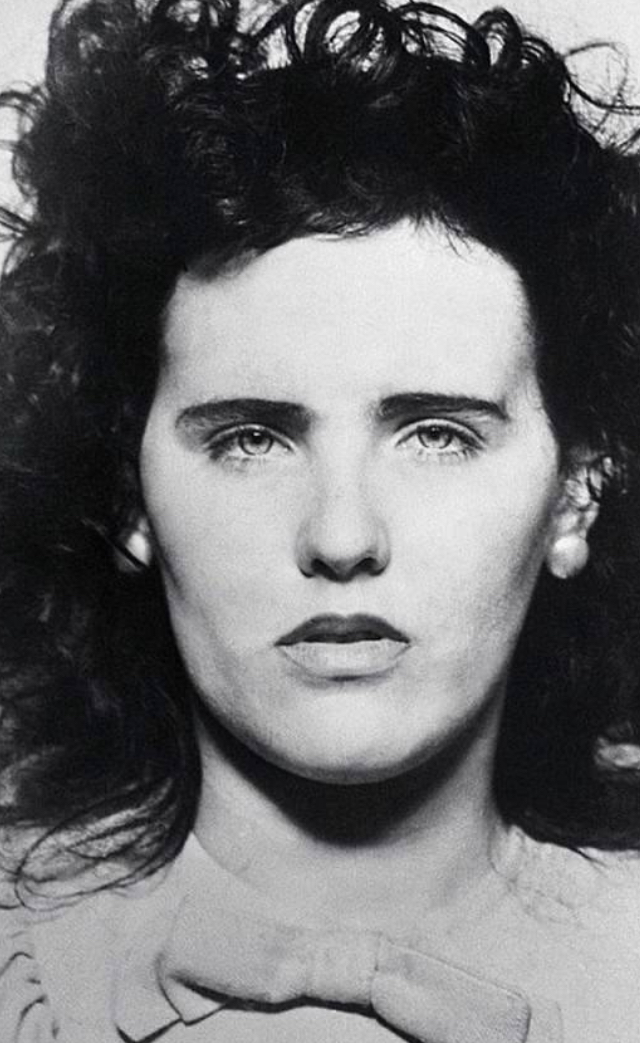
Elissa Teresa Kastin, a vibrant 21-year-old woman known to friends as "Lissa," was building a life for herself in Los Angeles in 1977. Born in Los Angeles County on December 10, 1955, she was the daughter of a World War II veteran, Bernard E. Kastin. Elissa balanced a full-time job as a waitress with her passion for dance. She was a talented professional dancer and a founding member of The L.A. Knockers, an all-female cabaret and dance troupe.
Her life was a whirlwind of work and performance, full of promise until it was brutally cut short in the fall of that year.
On the night of Saturday, November 5, 1977, Elissa was abducted after finishing her shift at work. As she drove home, she was followed by two men, cousins Angelo Buono Jr. and Kenneth Bianchi. The pair pulled her over, impersonating police officers by flashing a fake badge. They told her they were detectives and needed to take her in for questioning. Under this guise of authority, they handcuffed her and forced her into their vehicle. It was a terrifying ruse the cousins would use to capture several of their victims. Elissa was taken to Buono's automobile upholstery shop in Glendale, the site where most of their horrific crimes were committed.
The following day, November 6, a grim discovery was made. Elissa's nude body was found discarded down an embankment near the Chevy Chase Country Club in Glendale. The scene told a story of a violent struggle and a cruel death. Investigators noted ligature marks on her neck, wrists, and ankles, clear evidence that she had been bound. An autopsy would confirm she had been raped and killed by ligature strangulation. Her body had been cleaned before it was dumped, a chilling signature the killers used to try and eliminate evidence.
Elissa's murder was the third in a string of killings that terrorized the Los Angeles area between October 1977 and February 1978. The media dubbed the perpetrator the "Hillside Strangler" because the victims were often left on hillsides surrounding the city. While the first two victims had connections to sex work, Elissa did not, a fact that broadened the fear gripping the community. It became clear that any young woman could be a target. The Los Angeles and Glendale police departments formed a massive task force to hunt for the killer, or killers, responsible for the deaths of ten women and girls, aged 12 to 28.
The reign of terror ended after Bianchi was arrested in Washington in January 1979 for the murder of two other women. While being investigated, he was linked to the California murders and eventually confessed, implicating his cousin, Angelo Buono. Buono was arrested on October 22, 1979. His trial, which began in November 1981, would become one of the longest and most expensive in American history, lasting two years and involving testimony from nearly 400 witnesses. Bianchi testified against Buono as part of a plea bargain.
In November 1983, a jury found Angelo Buono Jr. guilty of nine of the ten murders, including the murder of Elissa Kastin. He was convicted on nine counts of first-degree murder with special circumstances, along with charges of rape and assault. The jury spared him the death penalty, and he was sentenced to life in prison without the possibility of parole. Buono died of a heart attack in his cell at Calipatria State Prison on September 21, 2002. Kenneth Bianchi was sentenced to life in prison with the possibility of parole for his role in the crimes.