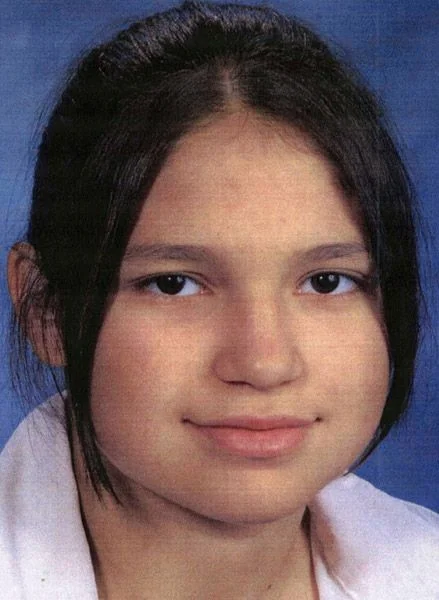
Cynthia "Cindy" Frances Maas, a 35-year-old woman of Indigenous heritage, was a daughter, sister, and mother who moved to Prince George, British Columbia, for access to programs that could help her overcome her struggles. Her family described her as a trusting and innocent person who, against all odds, had graduated from a private school. Born with a disability that made her more vulnerable, Cindy had dreams for her life but fell into addiction.
Despite these challenges, she remained in contact with her family, attending support meetings and expressing a desperate desire to change. In one poignant text message to her niece, she apologized for not being the aunt she wanted to be.
Cynthia was last seen alive on September 10, 2010, in the area of Juniper Street and 19th Avenue in Prince George. When she failed to make her regular check-ins, her concerned family and friends reported her missing on September 23. The search for Cynthia ended in heartbreak nearly a month after she disappeared. On October 8, 2010, police officers discovered her remains in a remote area of L.C. Gunn Park, a local park. An autopsy confirmed she had died from horrific violence, including blunt-force trauma to the head and penetrating wounds. Her injuries included a broken jaw and cheekbone, and wounds to her neck consistent with being stomped on.
The investigation into Cynthia's homicide involved more than 40 investigators who were determined to find justice for her. At the time, her death heightened fears in a region already scarred by the "Highway of Tears," a stretch of Highway 16 notorious for the many women, a disproportionate number of them Indigenous, who have been murdered or gone missing along it. Police urged the public, particularly vulnerable citizens, to be vigilant, stating, "The sole and most important fact that has been established is that Cynthia Maas is a victim. Our duty and responsibility is to bring to justice, whomever is responsible for her death."
The break in the case came not from Cynthia's investigation directly, but from a seemingly unrelated traffic stop on November 27, 2010. An alert RCMP officer pulled over a speeding pickup truck leaving a remote logging road. The driver, 20-year-old Cody Alan Legebokoff, had blood on his face and legs. Following tracks from the truck, a conservation officer discovered the body of 15-year-old Loren Leslie. Legebokoff's arrest for Loren's murder soon connected him to a string of other killings. DNA evidence linked him conclusively to the deaths of Cynthia Maas, 35-year-old Jill Stuchenko, and 23-year-old Natasha Montgomery. Cynthia's DNA was found on a pickaxe and running shoes in Legebokoff's apartment, as well as on clothing in his truck.
Cody Legebokoff, who became known as "The Country Boy Killer," was charged with four counts of first-degree murder. During his trial, the court heard gruesome details of the violence he inflicted upon his victims. In September 2014, a jury found him guilty on all four counts. Legebokoff was sentenced to life in prison with no possibility of parole for 25 years. At the sentencing, Cynthia's sister, Judy Maas, spoke of the family's pain and sought to reclaim her sister's memory from the labels used during the trial. "She was an innocent," Judy said. "She believed that everybody had everyone's best interests in their heart, because she did. She was trusting."
In a powerful statement, Cynthia's family called for broader societal change to protect vulnerable women. They thanked the RCMP for their diligent work but also urged journalists to refrain from lifestyle descriptions that "numbs public empathy and detracts from focusing on the brutal murder." They highlighted that Cynthia had a right to live, to overcome her struggles, and to be the mother she wanted to be. Though her killer is behind bars, her family's fight for a safer society for all women continues to honor her memory.