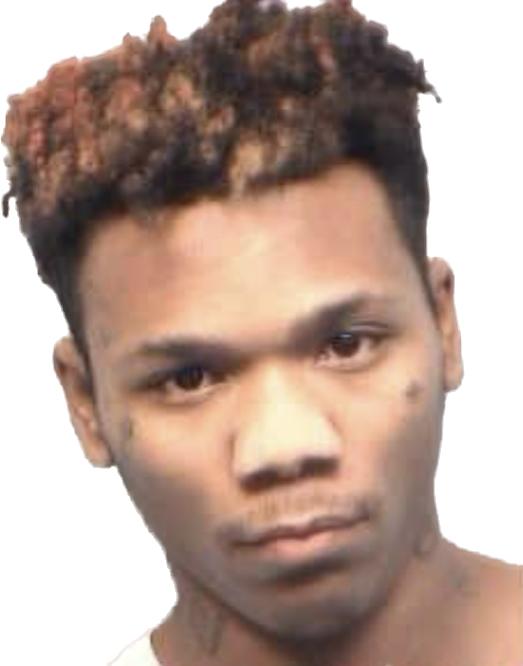
Abdullah Davis was 35 years old when he was killed in Atlanta on Wednesday, March 7, 2007. The Atlanta Police Department Homicide Unit investigated his death, and the Washington Post's homicide database, which tracked killings in Atlanta from 2007 through 2017, lists it as a homicide that remained open with no arrest.
Beyond his name, his age and the date of his death, almost nothing about Abdullah Davis has been made public.
No news story about the killing, obituary, memorial page or family fundraiser could be found for this account. He surely had family, friends and neighbors who remember who he was, but none of that has entered the public record.
Because so little has been released, even the basic circumstances remain unknown to the public. The record does not say how he was killed, whether he was attacked indoors or on the street, whether he knew his attacker, what time of day it happened, or whether he died at the scene or later at a hospital. It does not say whether investigators ever identified a suspect.
Abdullah Davis's name also appears in a 2018 Washington Post investigation that listed thousands of homicide victims across major American cities whose killings had not led to an arrest, meaning the case was still counted among them more than a decade later.
His name is less common than many in the database, but searches for it are still dominated by other people, including a man of the same name charged in an unrelated federal drug case in Washington, Georgia, in 2021 and a father quoted in an unrelated school story. None of them has any known connection to this case, and their stories make it harder to find any trace of the man who died in Atlanta in 2007.
At 35, he was older than most of the city's homicide victims in those years, an age when many men are raising children and holding steady jobs. He was killed on a Wednesday, an ordinary weekday, and someone who expected to see him at work, at home or at a mosque or church may remember when he did not appear.
The location recorded in the Post's database places his death in southwest Atlanta, south and west of downtown. People who lived or worked in that area at the time may remember the police activity that followed his death, and may know more than they realize about what happened.
Atlanta, the capital of Georgia and the center of a metro area of more than 5 million people, recorded roughly 75 to 130 homicides a year between 2007 and 2017. Most victims in those years were young men, and most were killed with guns. Many killings from those years never led to an arrest, and the Washington Post's 2018 investigation counted Atlanta among the cities with large numbers of unsolved homicides. Cases with few public details, like his, often faded from view quickly.
No arrest, criminal charge or court case connected to the death of Abdullah Davis could be found in news archives or public records. More than 19 years later, there is no public sign that anyone has been held responsible. Anyone who knew Abdullah Davis and saw him in the days before he died, or who heard talk afterward of what happened, may be able to help. Even a small detail, such as a name overheard, a car seen leaving the area or a conversation remembered, can help detectives move a case forward. Anyone with information can call the Atlanta Police Department Homicide Unit at 404-546-4235, or leave an anonymous tip with Crime Stoppers Greater Atlanta at 404-577-TIPS (404-577-8477), which may pay a cash reward for information that leads to an arrest.