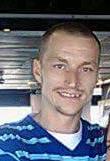
Harold Amos was 45 years old when he died on Monday, June 24, 2019, after he was found injured near the 2000 block of Whittier Avenue in Baltimore. He died of blunt force injuries. The Baltimore Police Department investigated his death, and the Baltimore Sun's homicide database lists it as a homicide.
The call that brought police to the area was not, at first, about him. According to WMAR-2 News, officers were notified at 8:45 p.m.
about a juvenile disturbance in the 2000 block of Whittier Avenue. When they arrived, they found Amos "suffering from trauma to his body laying behind a 2004 Hyundai Sonata that had crashed in the rear of the 2300 block of N. Pulaski Street." The Baltimore Sun's notes on the case describe the same scene: police found a Hyundai Sonata that had crashed a block away, "then they found the man right behind the car."
Amos was taken to Shock Trauma, where he was pronounced dead at 4:44 a.m. WMAR reported that homicide detectives believed "he died from blunt force trauma." The public reports do not explain how the crash, the juvenile disturbance and his injuries were connected, whether he had been in the car, near it or struck by it, or whether anyone was seen leaving the scene. They also do not say who was driving the Sonata or whether the driver was ever identified. The fact that detectives treated the death as a homicide suggests they believed another person was responsible, but no further details were released in the coverage that could be found.
An online obituary for a Harold Phillip Amos Jr., known to loved ones as Phil, was posted around the date of his death and lists a birth date of September 21, 1973, which would match his age. It may be his, though no news account confirms the connection. Harold Amos is not an especially common name, and most other people who share it online are unrelated, including a noted Harvard scientist who died in 2003 and whose name is attached to a national medical faculty program.
Whittier Avenue and North Pulaski Street are residential streets lined with rowhouses, close enough together that the crashed car came to rest only about a block from where police were first called. Streets like these are busy on summer evenings, and a crash and a disturbance would likely have drawn attention from people on porches and in nearby homes.
After the unrest of 2015, Baltimore recorded more than 300 homicides a year for eight straight years, and the share of killings that ended in an arrest fell sharply.
No arrest, criminal charge or court case connected to the death of Harold Amos could be found in news archives or public records. More than seven years later, there is no public sign that anyone has been held responsible. Anyone who was near Whittier Avenue or North Pulaski Street on the evening of June 23, 2019, who saw the Hyundai Sonata crash or knows who was with Harold Amos that night, may hold information that matters. Even a small detail, such as a name overheard, a vehicle seen nearby or a conversation remembered, can help detectives move a case forward. Anyone with information can call Baltimore Police homicide detectives at 410-396-2100, or leave an anonymous tip with Metro Crime Stoppers of Maryland at 1-866-7LOCKUP (1-866-756-2587).