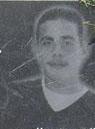
On Monday, October 23, 2006, sixty-year-old Manuel Renteria Marquez, a Latino man, lost his life under violent circumstances in the city of Norwalk, California. First responders and law enforcement were summoned to handle the fatal emergency, which abruptly claimed the life of an older resident in the southeastern corner of Los Angeles County. The precise mechanism and medical cause of Marquez's death were not publicly released by examining authorities, who officially recorded the fatality under an open homicide classification.
Norwalk is an established suburban community situated roughly seventeen miles southeast of downtown Los Angeles, bordering communities such as Downey, Bellflower, and Santa Fe Springs. Served primarily by the Norwalk Station and the Homicide Bureau of the Los Angeles County Sheriff's Department, the area encompasses quiet residential neighborhoods, bustling commercial corridors along Imperial Highway and Pioneer Boulevard, and heavily traveled transit routes. Despite being a relatively quiet municipality compared to denser portions of the county, Norwalk experienced a notable number of violent encounters and homicides during the mid-2000s, reflecting broader regional patterns of violence that stretched local investigative resources.
Deputies and homicide detectives from the Los Angeles County Sheriff's Department responded to process the scene where Marquez was discovered. Investigators documented physical evidence, searched for prospective witnesses, and attempted to reconstruct the timeline leading up to the deadly encounter. However, in the days and weeks following Marquez's death, no public accounts, witness descriptions, or details regarding possible suspect vehicles were disseminated by investigators, leaving neighbors and the broader community with minimal insight into the tragic event.
Throughout 2006, Los Angeles County recorded over one thousand homicides, presenting an overwhelming caseload for regional detectives who frequently juggled multiple complex investigations simultaneously. In many incidents occurring during that period, cases without immediate confessions, clear surveillance recordings, or cooperating eyewitnesses quickly turned cold. While forensic analysts logged physical findings from the scene and submitted evidence for testing, the trail surrounding Marquez's death grew increasingly quiet.
No suspect was ever named or apprehended in connection with the homicide of Manuel Renteria Marquez, and no formal charges have ever been filed in court. Law enforcement agencies in Los Angeles County continue to maintain cold case files on unresolved homicides, periodically reassessing evidence in hopes that emerging forensic technology or new community tips might offer answers. Investigators routinely encourage anyone who may have knowledge of the events surrounding Marquez's death to bring relevant information forward.
Today, nearly two decades after his death in October 2006, the case remains officially unsolved. The circumstances of how Manuel Renteria Marquez met his end continue to linger without closure, leaving the identity and motive of his killer hidden in an enduring open investigation.