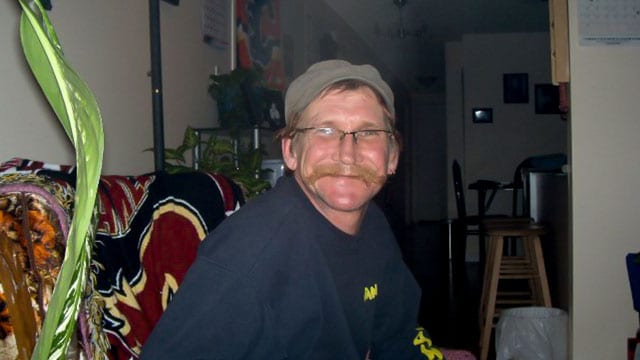
Peter Sopow, a 52-year-old man, was a veteran Royal Canadian Mounted Police sergeant and the commander of the Fort Macleod detachment when he was killed near Pincher Creek, Alberta, on December 13, 1997. He had served with the RCMP for approximately 32 years and was the father of two grown children. At the time, he had been dating Lorraine McNab, a kindergarten teacher at Canyon School in Pincher Creek, for about six months.
Both had previously been married and had children of their own.
That Saturday evening, Sopow and McNab traveled to nearby Twin Butte to spend time and have dinner with members of McNab's family. They left the gathering at about 10 p.m. and returned to her rural acreage south of Pincher Creek at approximately 10:30 p.m. Investigators concluded that someone was waiting for them when they arrived. The couple made it only as far as the area outside McNab's home before they were shot with a. 22-calibre firearm. Police later described the killings as an ambush and indicated that they did not believe the attack was random.
After the shooting, the killer or killers moved both victims from where they had fallen and dragged their bodies to a horse trailer on the property. Their bodies were placed inside and the trailer was locked. There was no apparent robbery connected with the murders, and investigators found no indication that the couple had interrupted a burglary or another crime in progress. Sopow's possessions were not taken, and the circumstances suggested that whoever carried out the attack had gone to the acreage specifically for the couple or for one of them.
The murders were not discovered immediately. Sopow failed to report for work, prompting concern among fellow RCMP members. Officers went to McNab's property, and on December 15, roughly a day and a half after the couple had been killed, their bodies were discovered inside the horse trailer. The discovery triggered a large homicide investigation involving officers and forensic specialists from outside the immediate area.
Investigators searched the acreage extensively for physical evidence and for the murder weapon, which has never been recovered. An expert with FBI experience in metal detection was brought to the scene in December 1997, and a Winnipeg police officer with expertise in soil and crime-scene examination assisted in early January 1998. Police later searched several bodies of water around the Pincher Creek area in an effort to find the missing. 22-calibre firearm. Despite those efforts, the weapon was not located. Over the years, investigators received more than 1,000 tips and eventually transferred responsibility for the investigation to the RCMP's Historical Case Unit.
One of the most significant investigative leads involved an older red or maroon two-door automobile, described as resembling an early-1970s Mercury Cougar, that had reportedly been seen near the area around the time of the murders. Investigators sought information about the vehicle as they attempted to identify who may have been near McNab's acreage. Police also examined the disappearance of a. 22-calibre firearm from the surrounding area and questioned its owner about how it had gone missing.
Attention also focused on reports that McNab had been receiving unwanted telephone calls and other attention before her death. Family members later described repeated calls in which the person on the other end would remain silent and said that an individual interested in McNab sometimes left flowers or other items at her home. These accounts fueled a theory that jealousy or an unwanted romantic pursuit could have played a role, although that theory has never been proven in court. Sopow's sister has also said that shortly before the killings he was seen leaving a jewelry store, leading to rumors that he intended to propose to McNab. According to her, he had actually been buying a necklace as a Christmas gift, but she has wondered whether the mistaken belief that the couple was becoming engaged could have provoked someone.
On December 17, 1997, RCMP arrested and questioned Wally Sparks, a local elementary school teacher who reportedly knew McNab through the school system. He was not charged with the murders. The following day he was detained under Alberta's Mental Health Act and taken to the psychiatric unit at Lethbridge Regional Hospital for assessment. He was subsequently released. Contemporary reporting connected police interest in him with several aspects of the investigation, but no criminal case was ever brought against him, and he has never been convicted in connection with the killings.
Years later, investigators continued to indicate that their focus had not disappeared. In 2004, an RCMP major-crimes sergeant said police had long believed the same suspect was responsible and that their investigative focus had not changed. That statement did not result in charges. Family members have continued to voice their own suspicions about people who were investigated, but those suspicions remain allegations rather than established findings of guilt.
Another unusual development came in 2001, when the RCMP received two anonymous handwritten letters originating somewhere in southern Alberta. Investigators reportedly believed the writer possessed meaningful information about the murders and publicly encouraged that person to contact them again, offering assurances of anonymity. The writer never made further contact, and police did not disclose the letters' contents.
Despite extensive forensic work, public appeals, searches for the weapon, more than a thousand tips, the arrest and questioning of a person of interest, and decades of review, no one has been charged or convicted of killing Peter Sopow and Lorraine McNab. The double homicide remained unsolved in the most recent reporting, with no publicly announced breakthrough identifying the person or persons responsible. The unanswered question of who was waiting at the Pincher Creek acreage that December night has remained at the center of the case for nearly three decades.