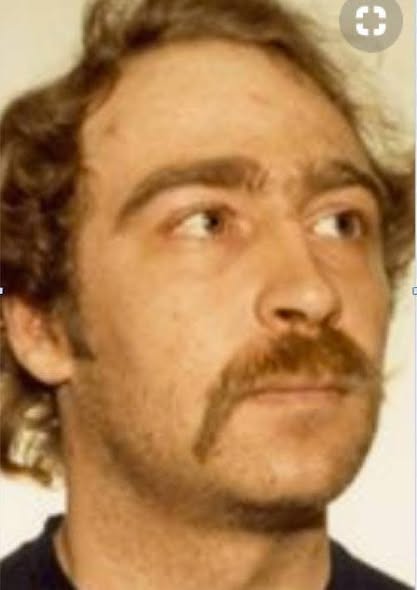
Casey Armstrong, a 48-year-old White/Caucasian man from Medicine Hat, Alberta, was found murdered inside his trailer home on Southview Drive on May 22, 2011. Although an earlier date of May 1 has sometimes been associated with the case, available accounts place the discovery of his body on May 22, during the Victoria Day long weekend. Armstrong had last been seen on the night of Friday, May 20, at a local pub.
He left at about 11 p.m., telling the manager, Terry Lynn Russell, that he was going to watch a hockey game. :chatgpt-content-reference
The following day, Russell noticed two women outside Armstrong's trailer. One appeared to have reddish hair beneath a baseball cap, while the other had darker hair. The women were seen placing what looked like a black garbage bag or duffle bag into the trunk of an older red car. That sighting would later become significant as investigators attempted to reconstruct what had happened after Armstrong left the pub. :chatgpt-content-reference
On Sunday morning, a friend went to Armstrong's home after repeatedly trying and failing to contact him. At approximately 10:38 a.m., Armstrong was discovered in the bathtub and police were called. He was lying on his side, still wearing Calgary Flames clothing, amid an extensively bloodied bathroom. Investigators found blood on the floor, walls and other surfaces. Medical evidence showed that Armstrong had suffered one or possibly two devastating knife wounds to the neck that severed major blood vessels and structures in his throat. He also had cuts to his arms. Paramedics believed he had already been dead for at least 12 hours by the time authorities arrived. :chatgpt-content-reference
The physical evidence presented investigators with several mysteries. Police were unable to recover fingerprints or DNA that identified Armstrong's killer. A partial bloody boot print, later described as approximately a men's size 11E, was found on the bathroom floor, but investigators were never able to determine who had made it. Police compared the tread with footwear and sent information about the print for additional examination, but no match was established. A magnetic beaded necklace was also found on top of the washing machine in a pool of blood. Investigators did not establish how it came to be there or what role, if any, it played in the struggle. :chatgpt-content-reference
Attention also focused on the red vehicle seen outside Armstrong's trailer. Investigators believed a red Pontiac Grand Am could have been connected to the crime. The vehicle was still registered to a woman police traced during the investigation, but she said she had sold it before Armstrong's murder for cash and drugs to a drug dealer she knew as "Ginger." Police were unable to locate the car as part of the homicide investigation. Wendy Scott, who would later become central to the prosecution, initially named Ginger and other individuals while giving changing accounts of Armstrong's death. :chatgpt-content-reference
After roughly eight months without a breakthrough, Sgt. Brent Secondiak reviewed the investigation and focused on statements made by Wendy Scott. Scott had been interviewed in December 2011, and Secondiak believed she had been dishonest with investigators. She was arrested on January 10, 2012, initially in connection with obstruction, and underwent further questioning. During a series of interviews, Scott gave multiple versions of events and named several different people before eventually saying that she and Connie Oakes had gone to Armstrong's home together and that Oakes had stabbed him while Scott was present. Scott was later determined to have significant intellectual and cognitive limitations, including an IQ measured at approximately 50. :chatgpt-content-reference
Police arrested Scott and Oakes and charged both with first-degree murder. On November 8, 2012, Scott pleaded guilty to the lesser offence of second-degree murder. The statement of facts presented with her plea alleged that Oakes had stabbed Armstrong and that Scott helped clean the scene afterward, including putting bloodstained clothing into a garbage bag and changing clothes before leaving. Scott received a life sentence with no possibility of parole for 10 years. :chatgpt-content-reference
Oakes maintained that she had not killed Armstrong and proceeded to trial. Scott became the Crown's principal witness and provided the only evidence directly identifying Oakes as the killer. Her testimony contained numerous inconsistencies, and she acknowledged having lied on previous occasions. Investigators had no DNA, fingerprints, murder weapon or established motive independently connecting Oakes to Armstrong's killing. Nevertheless, on November 15, 2013, a Medicine Hat jury convicted Oakes of second-degree murder. She was sentenced to life imprisonment with no possibility of parole for 14 years. :chatgpt-content-reference
The case began to unravel after the trial. Scott told advocates that she did not believe Oakes had been at Armstrong's trailer when he was killed and swore an affidavit saying she had falsely confessed because she had been frightened. Questions also arose about whether the facts presented when Scott entered her own guilty plea were legally sufficient to establish that she was a party to murder. The Crown ultimately conceded that there had been a serious legal error, and on October 16, 2015, the Alberta Court of Appeal overturned Scott's conviction and ordered a new trial. :chatgpt-content-reference
That development severely undermined the conviction of Oakes because Scott's testimony had been the foundation of the prosecution against her. On April 6, 2016, the Alberta Court of Appeal, in a two-to-one decision, concluded that allowing Oakes's conviction to remain in place would amount to a miscarriage of justice. Her conviction was overturned and a new trial was ordered. Rather than proceed immediately with another trial, prosecutors stayed the murder proceedings against Oakes on April 28, 2016, and she was released. :chatgpt-content-reference
Scott was also awaiting a new trial after her conviction was overturned, but on January 13, 2017, the Crown stayed the murder charge against her as well. The prosecutions were not revived within the period available to do so. As a result, neither Scott nor Oakes has a standing murder conviction for Armstrong's death. The convictions that once appeared to resolve the killing were erased, while the unidentified bloody boot print, the red car, the changing accounts of who was present and the absence of conclusive forensic evidence remained unresolved. Casey Armstrong's murder is considered unsolved, with no one currently convicted of killing him. :chatgpt-content-reference