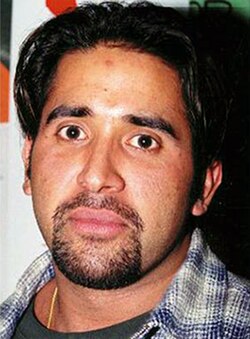
Craig Abrahams, a 28-year-old man, was living in Vancouver, British Columbia, when his life ended in a homicide in December 1995. He had grown up in Mississauga, Ontario, where he was remembered as outgoing and sociable. That personality helped lead him toward hotel management studies at Humber College. His career eventually brought him west, first through a co-op position in Banff and later to Vancouver, where he worked at the Four Seasons Hotel.
By 1995, Abrahams was working as a
doorman at Vancouver's Odyssey Club. During that period, police say he became involved in cocaine trafficking. He reportedly attempted to establish a customer base by selling cocaine below the prevailing market price, a decision that may have brought him into conflict with others involved in the drug trade. After nearly seven months at the Odyssey, Abrahams resigned on October 4. In a two-page resignation letter, he accused an unnamed fellow employee of spreading rumors about him. Police have also acknowledged rumors that at least one other drug dealer had become angry over Abrahams' lower prices and had allegedly threatened him. Authorities have not publicly identified that person as a suspect or established that the reported threat was directly connected to the killing.
After leaving the Odyssey Club, Abrahams was believed to have continued selling drugs from his apartment at 1255 Pendrell Street in Vancouver's West End. At the same time, he remained close to his family in Ontario and maintained regular contact with them. Before his death, he was reportedly making plans to return to Toronto, suggesting that the period of his life in Vancouver may have been approaching an end.
Abrahams was last seen alive during the early morning hours of December 18, 1995. Vancouver Police list December 18 as the date of the homicide, rather than December 21. Several days passed without Abrahams being discovered. On December 21, a neighbor went to his apartment to retrieve a cat that Abrahams had been pet-sitting. When the neighbor entered the residence, Abrahams' body was found inside. Police subsequently treated the death as a murder. Publicly available Vancouver Police material does not disclose the specific cause of death or the precise injuries he suffered.
Investigators examined the circumstances surrounding Abrahams' life in the months before his death, including his cocaine sales and the reported friction created by his practice of undercutting other dealers. Those circumstances provided investigators with potential avenues of inquiry, but the Vancouver Police Department has never publicly named a person responsible for killing him. The reported dealer who allegedly threatened Abrahams remains unnamed in the police account, and there is no publicly documented evidence establishing that individual as the killer.
Years after the homicide, Vancouver Police placed Abrahams' case on its Cold Case website in an effort to generate new information from the public. Police said investigators had spent years attempting to determine what happened and who was responsible. The department's cold-case program has continued to describe his death as an unsolved homicide and lists the case among murders in which the killer has not been caught.
No arrest, criminal charge, trial, or conviction has been publicly reported in connection with Abrahams' murder. The case remains open, and the available police information does not identify a confirmed suspect. Decades after his body was discovered inside the Pendrell Street apartment, the central question of who killed Craig Abrahams—and whether his involvement in the cocaine trade played a direct role in his death—remains unanswered.