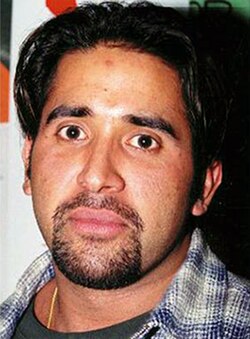
Bhupinder “Bindy” Singh Johal, a 27-year-old Indo-Canadian man of Punjabi origin, was fatally shot on December 20, 1998, inside the Palladium nightclub in Vancouver, British Columbia. Johal had become one of the most recognizable figures in Vancouver’s organized-crime world during the 1990s, with police and media linking him to cocaine trafficking, extortion and a series of violent disputes.
His growing list of enemies and deteriorating relationships within his own organization created a dangerous backdrop to the killing that ultimately ended his life.
In the early morning hours, Johal was on the crowded dance floor at the Palladium when a gunman moved up behind him and shot him in the head at close range. Reports placed hundreds of people inside the nightclub, yet investigators were unable to obtain a usable identification of the shooter. Johal was taken to Vancouver General Hospital, where he died several hours after the shooting. The attack had the appearance of a targeted execution rather than a spontaneous confrontation, and the killer was able to escape despite the large number of potential witnesses.
Johal entered the final months of his life surrounded by violent underworld conflicts. He had previously been charged in connection with the gangland killings of brothers Ron and Jimmy Dosanjh, but he and his co-accused were acquitted after a lengthy 1995 murder trial. The proceeding later became notorious when it was discovered that juror Gillian Guess had engaged in a relationship with co-defendant Peter Gill; Guess was subsequently convicted of obstruction of justice. Johal remained free and continued to be associated with Vancouver’s drug trade and violent criminal networks.
One of the most significant developments in the investigation came years later from Bal Buttar, a former Johal associate who had worked closely with him. In a series of 2004 interviews with Vancouver Sun reporter Kim Bolan, Buttar claimed that he personally arranged Johal’s assassination. Buttar described a five-member murder-for-hire group known as “The Elite,” which he said had originally operated under Johal’s control. According to Buttar, loyalty within Johal’s organization deteriorated during 1998, eventually allowing Buttar to take control of the group and turn it against its former leader.
Buttar alleged that Johal had become increasingly unpredictable and violent toward his own associates. He claimed to have witnessed Johal shoot Derek Chand Shankar beneath the Queensborough Bridge in September 1998 after Shankar had insulted him during a night of drinking. Buttar also alleged that Johal was responsible for the later killing of associate Roman “Danny” Mann after Mann indicated that he wanted to leave the organization. These accusations came solely from Buttar’s later account and did not result in Johal being prosecuted for either killing. Buttar said the deaths convinced him that Johal was willing to eliminate people within his own circle and that his own life was in danger.
The tension intensified on December 5, 1998, when Johal and Buttar were stopped by Delta police on Scott Road and a. 45-calibre handgun was discovered in their vehicle. Buttar later claimed the weapon belonged to Johal and said he became convinced during the encounter that Johal had intended to kill him that night. According to Buttar, Johal asked him to accept responsibility for the firearm. Buttar said he agreed, in part because being in custody would provide him with an alibi while arrangements were made to have Johal killed.
Buttar told the Vancouver Sun that he then instructed members of The Elite to assassinate Johal and paid $20,000 for the contract. He claimed the group carried out the order at the Palladium on December 20. Buttar said his motive was self-preservation, maintaining that he believed Johal would have killed him if he had not acted first. Although the confession provided a detailed alleged explanation for how the murder was arranged, Buttar refused to publicly identify the members of The Elite who he said participated, leaving the identity of the actual gunman undisclosed.
Buttar himself was shot twice in the head at a Vancouver hair salon in August 2001, leaving him blind and quadriplegic. When he publicly admitted his involvement in Johal’s killing in 2004, he also acknowledged roles in several other unsolved gangland murders. Despite those admissions, he was never charged with Johal’s murder or with the other killings to which he claimed connections. Buttar died in 2011.
No person has been convicted of killing Johal, and the murder remains officially unresolved despite Buttar’s confession to arranging the hit. The crowded nightclub produced no witness capable or willing to identify the shooter, and Buttar’s later account never resulted in a prosecution of either himself or the unidentified members of the alleged contract-killing crew. The case consequently remains one of Vancouver’s best-known unsolved gangland assassinations, with the strongest publicly reported account pointing to an internal power struggle within Johal’s own criminal organization rather than an arrest, trial or judicial finding establishing who fired the fatal shot.