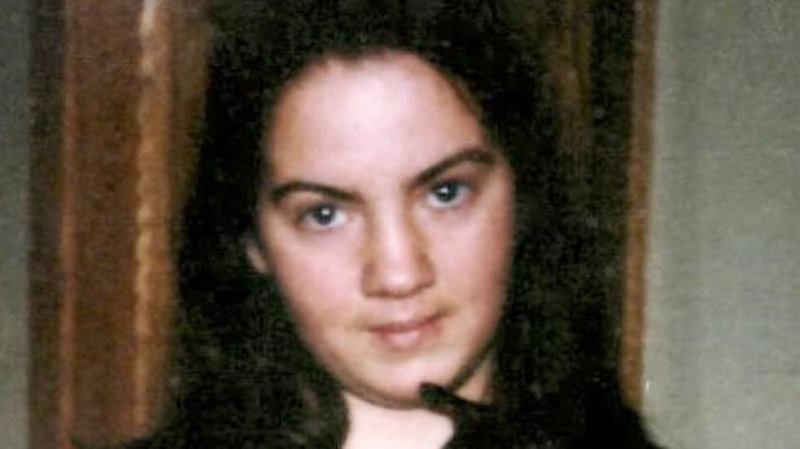
Louise Camirand was a 20-year-old woman living in Sherbrooke, Quebec, when she disappeared in March 1977. Although an October 1, 1977 date has sometimes been associated with the case, the Sûreté du Québec's official cold-case record places the event on March 23, 1977, with her body discovered two days later. Camirand lived on Bryant Street in Sherbrooke and had held several jobs, including work connected with Sherbrooke Hospital.
She was also a member of the Sherbrooke Hussars, a Canadian military reserve regiment, and was engaged to be married within the next several weeks.
On the evening of March 23, Camirand was seen at about 8 p.m. inside the Provisoir convenience store at 1780 King Street West in Sherbrooke. The store owner later recalled that she spent some time looking through magazines before leaving in the direction of a nearby bus stop. The bus stop was along the route she normally would have taken toward home. That was the last confirmed sighting of her alive. When she failed to return and relatives could not locate her, concern quickly grew and her disappearance was reported to authorities.
Two days later, on March 25, Robert Curtis and Florent Henri were traveling through a rural area near Austin, in the Magog region, when they discovered Camirand's body beside the McDonell concession road near Giguère Road, now known as Duval Road. The isolated location was well away from where she had last been seen in Sherbrooke. Published accounts describe her as having been left unclothed in the wooded roadside area, although her engagement ring remained with her and some of her clothing was found nearby. Her boots, underwear and identification were reportedly missing.
The investigation established that Camirand had been sexually assaulted and strangled. A cord or bootlace was found around her neck, and later accounts of the autopsy reported additional severe injuries, including mutilation. The condition of the scene indicated that she had suffered a highly violent attack before her body was abandoned in the rural area. Her family told reporters that they knew of no enemies she might have had, making the reason she was targeted difficult to explain.
Police pursued numerous leads and questioned many people during the original investigation, but the case gradually stalled. By October 1977, contemporary reporting was already describing the killing as an unresolved mystery despite extensive questioning and investigative work. No evidence publicly released by authorities established who intercepted Camirand after she left the convenience store, whether she willingly entered a vehicle, or where the fatal assault occurred before her body was left near Austin.
Over the decades, Camirand's killing has repeatedly been examined alongside other unsolved deaths of girls and young women in Quebec's Eastern Townships, particularly those of Manon Dubé and Theresa Allore. Researchers have proposed that some of the crimes could have been committed by the same offender, and independent investigators have advanced theories involving particular individuals. Those theories have not resulted in a publicly established connection or criminal prosecution, and the Sûreté du Québec's current cold-case information does not identify an official suspect in Camirand's murder.
As recently as 2025, Camirand's family continued to describe the case as unresolved. Her brother Bernard recalled the frantic search after she disappeared and the decades of uncertainty that followed. Despite renewed publicity, cold-case reviews and advances in forensic science, no one has been arrested, charged, tried or convicted for her murder. The Sûreté du Québec continues to classify the killing as an unsolved case and still seeks information capable of identifying the person responsible.