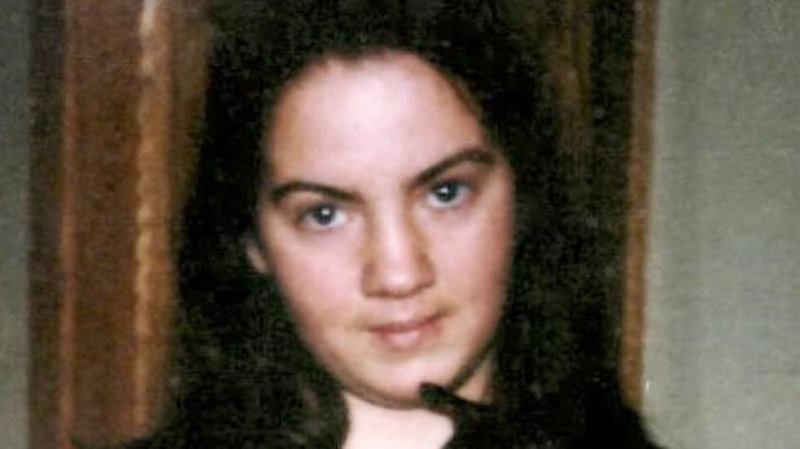
Lison Blais, a 17-year-old female, spent the evening of Saturday, June 3, 1978, out with friends in Montreal. Accounts indicate the group visited a discotheque on Saint-Denis before going to Bar Chez Philippe on Saint-Laurent Boulevard. At approximately 3:25 a.m. on June 4, Blais left the bar. How she traveled back toward her family home at 4685 Christophe-Colomb Street has never been established publicly.
Only several hours later, at about 9:00 to 9:20 that morning, Rudolf Pacesa, a man
who was doing odd jobs in the neighborhood, discovered Blais's body behind the family residence, close to the entrance from the adjoining alley. She was partially undressed. Blood was reportedly visible at several points around the scene, including on the gate in the fence separating the yard from the alley, suggesting a violent attack had occurred at or very near the property. Despite the violence, Blais's sister, whose bedroom faced the rear of the house, said she heard nothing, and neighbors questioned by investigators likewise reported hearing no disturbance.
The autopsy documented extensive trauma to Blais's head and face, including numerous open fractures. Investigators believed a brick had probably been used to inflict the injuries. Reports also stated that she had been sexually assaulted with an object and that there were strangulation marks on her neck. Her clothing and black purse were missing from the scene. Investigators were particularly interested in locating the purse and appealed publicly for help finding it, but it was never recovered as part of the original investigation. A pair of pants that had reportedly been hanging on the family's clothesline the previous day was also missing.
The original Montreal police investigators were Jean Legros and Claude Lachapelle. Police attempted to reconstruct what happened after Blais left the bar, but no publicly identified witness was able to establish who accompanied her, whether she entered a vehicle, or how she reached the area behind her home. The fact that she apparently made it back to her own neighborhood, only to be killed within feet of the family residence, left investigators with a very narrow but unexplained final portion of her movements.
The coroner's investigation, conducted by Maurice C. Laniel, was suspended on November 21, 1978, because Montreal police were not ready to proceed. No significant investigative breakthrough subsequently became public. Contemporary reporting also drew attention to similarities between Blais's killing and several other killings of females in Quebec during the same period, including cases in which victims had been strangled or personal belongings had disappeared. Later researchers have continued to explore whether some of those crimes could have been connected, but no official determination has established that Blais was the victim of a particular serial offender.
One later point of interest involved a purse recovered during a 2006 search of the area where murder victim Louise Camirand had been found in Austin, Quebec. Researchers believed the purse resembled the black purse missing from Blais's murder scene. The item was submitted to a forensic laboratory at Simon Fraser University, but testing reportedly produced no usable DNA. The resemblance therefore never established that the purse belonged to Blais or that her murder was connected to Camirand's case.
Decades after the killing, Blais's family was still seeking answers. Her sister, Solange Blais, said that after repeatedly trying to obtain information about the investigation, Montreal police Sergeant-Detective Robert Lebrun contacted her in 2017 and told her the case had been closed around 2009 or 2010 and that evidence associated with it had been destroyed. Solange had hoped preserved evidence might be examined with modern DNA technology that did not exist in 1978. When the Journal de Québec reported on the case in 2018, the SPVM had not responded to the newspaper's repeated requests for information about the status of the file, so the circumstances surrounding the reported closure and destruction of evidence were not independently explained by police in that article.
No publicly documented suspect has been charged with killing Lison Blais. Searches of available reporting reveal no arrest, prosecution, trial, or conviction in connection with her murder. More than four decades after she left the Montreal bar in the early morning hours of June 4, 1978, the identity of the person who attacked her behind her home remains unknown, and the killing continues to be listed as unsolved.