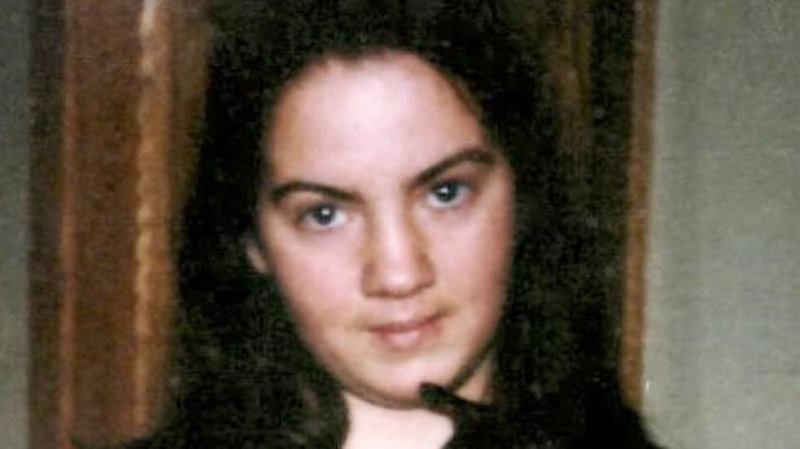
Nicole Gaudreaux, a 31-year-old woman, was found murdered in Montreal on August 3, 1979, after a violent sexual assault in the Saint-André Street area. Archival accounts place her in the city’s Plateau area after she had spent the evening of August 2 at a bar called the Baltimore, located near the corner of Saint-Hubert and Ontario streets. Investigators believed she was headed toward Saint-André Street when she encountered the person who would attack her.
Police were directed to the crime scene by an anonymous telephone call. Later research into contemporary Allo Police reporting indicated that this was not simply a passerby reporting the discovery of a body. The caller reportedly claimed responsibility for killing a woman and told authorities that she could be found in the vacant lot on Saint-André Street. The call became one of the most disturbing elements of the investigation because it suggested that the killer himself may have deliberately led police to Gaudreaux.
Her body was discovered in a field or vacant lot behind 2032 rue Saint-André. She was lying on her back, partially unclothed, with extensive blood around her face. Investigators Roland Ouimet and Maurice Chartrand of the Montreal municipal police handled the case. Evidence suggested that the vacant lot was probably not where the entire assault occurred. A large quantity of blood was discovered on the steps at 2036 Saint-André, leading investigators to believe Gaudreaux had been severely attacked there before being moved or dragged into the lot where her body was left. Her empty purse was recovered only a short distance from her body.
The physical evidence showed an exceptionally violent attack. Gaudreaux had been raped and badly beaten around the head. The recorded causes and contributing injuries included manual strangulation, cerebral contusions, a fractured skull and cerebral hemorrhaging. The amount of blood found on the nearby steps was consistent with the serious head trauma. An autopsy was performed at Montreal's medico-legal laboratory on Parthenais Street by Dr. André Brosseau, and Gaudreaux's brother later identified her body.
Some of her clothing and personal effects were scattered around the area, reinforcing the belief that a struggle had taken place before her body was deposited in the vacant lot. She still had blue stockings, a pink blouse that had been pulled upward over her head and a detached beige bra. Her black pants, red shoes and purse were found near steps farther along Saint-André Street. The purse contained a dental prosthesis. Archival research has produced some uncertainty over whether Gaudreaux actually lived at 2030 Saint-André or whether that address was simply her intended destination that night. She was originally from Chicoutimi.
Montreal police considered at least two general possibilities for how the attack began. One was that Gaudreaux left the Baltimore bar with a man and the two proceeded toward Saint-André Street, where his advances became an assault. Another possibility was that she left the bar alone and was confronted by a stranger while walking to her destination. Later accounts of the police investigation indicate that authorities considered whether her killer had been drinking with her before they left the Baltimore together, but no publicly documented identification of that person emerged.
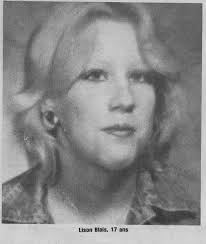
The circumstances also drew attention because Gaudreaux's killing occurred amid a series of unresolved attacks on women in and around Montreal during the 1970s. In particular, researchers have compared her murder with that of Lison Blais, whose body had been discovered in Montreal roughly fourteen months earlier and less than a mile away. Blais also suffered strangulation, head injuries and sexual assault, and both women were found behind residential areas. Those similarities have led to speculation that the crimes could have been connected, although no publicly available evidence establishes that they were committed by the same person.
The anonymous telephone call has also prompted comparisons with the 1977 murder of Katherine Hawkes. In that investigation, a caller contacted police and directed them to the location of a woman who had been attacked. Gaudreaux's case involved a similarly unusual call in which the unidentified speaker purportedly admitted killing a woman and gave the location of the body. Researchers have questioned whether the resemblance indicates a common offender, but no official determination linking the cases has been publicly established.
Several men have been discussed retrospectively in connection with unsolved Montreal killings from the period, but the available sources do not establish any of them as Gaudreaux's officially identified killer. Serial murderer William Patrick Fyfe has sometimes been considered in discussions of Montreal-area homicides from the late 1970s, but researchers have noted substantial differences between Gaudreaux's nighttime outdoor attack and Fyfe's better-established pattern of entering homes during the daytime and attacking women indoors. No evidence located shows that Fyfe was arrested, charged or prosecuted for Gaudreaux's murder.
Another retrospective theory has focused on Edmond Turcotte, a man who had previously been accused of murdering Diane Thibeault in Montreal. Turcotte had confessed to Thibeault's killing, but his confession was excluded and the case against him ultimately failed. He was released in the spring of 1979, only a few months before Gaudreaux was killed. The two murders occurred almost exactly four years apart and involved severe beatings, strangulation or similar violence, sexual assault and the movement of victims from one location to an outdoor area. Those circumstances led researcher John Allore to propose Turcotte as a possible offender in Gaudreaux's case. That remains a theory rather than an established police finding: there is no publicly documented evidence that Turcotte was arrested, charged, tried or convicted in connection with Gaudreaux's death.
Despite the physical evidence, the extraordinary telephone call and decades of comparisons with other Montreal homicides, no arrest or prosecution for Nicole Gaudreaux's killing is documented in the available online sources. Her murder continues to be listed among Canada's unsolved homicides, leaving the identity of the person who attacked her near Saint-André Street and then directed police to her body unresolved.