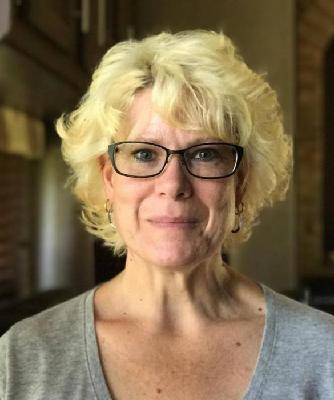
Erin Elizabeth Bushek Somvilai, a 35-year-old White/Caucasian woman from La Crosse, Wisconsin, disappeared during the first days of June 2018, beginning a search that would ultimately become a homicide investigation. Family members reported her missing on June 4 after she had not been heard from. Relatives said she had left important belongings at home, including her wallet, credit cards, cash, car keys, and medication, making her disappearance especially alarming.
Her family, friends, law enforcement officers, and members of the community searched for her while investigators tried to reconstruct her final movements. Somvilai was a nursing-school graduate who had worked caring for patients and was the mother of two young children.
The search ended tragically on June 17, 2018, when a fisherman discovered Somvilai's body in Runge Hollow Lake in Vernon County, roughly 20 miles from La Crosse. Although June 17 was publicly recorded as her date of death in obituary information, investigators believed the circumstances leading to her death occurred much earlier, around the time she disappeared. Authorities found her body secured with ropes and weighted with concrete blocks, an arrangement police believed had been intended to prevent her from surfacing and being discovered. La Crosse police, the Vernon County Sheriff's Office, and the Wisconsin Division of Criminal Investigation became involved, and what had begun as a missing-person case was formally treated as a homicide investigation.
The autopsy became one of the most important—and ultimately most disputed—pieces of evidence. Dr. Ross Reichard, the pathologist who performed the examination, classified the manner of death as homicide and described the cause as "homicidal violence," but he was unable to identify a specific fatal injury or precise mechanism that caused Somvilai's death. Toxicology testing detected amphetamine and clonazepam in her system. During later testimony, Reichard explained that he did not believe the death was natural, accidental, or self-inflicted. He also testified that the absence of a bodily reaction to the ropes and other bindings indicated that Somvilai was already dead when she was tied to the weights, a conclusion that became central to the prosecution's theory.
Investigators soon focused heavily on Somvilai's former boyfriend, Erik J. Sackett. Police said Sackett initially gave statements about his interactions with Somvilai and his whereabouts that investigators later determined were inaccurate. Their relationship had deteriorated, and prosecutors contended that events surrounding the breakup supplied a possible motive. Investigators learned that Somvilai had been distressed about Sackett's involvement with another woman and had sent him emotionally charged messages during the period immediately before she vanished. Prosecutors also presented evidence that Somvilai had allegedly threatened to accuse Sackett of rape, something investigators believed could have threatened his freedom because of his prior criminal history and supervision status.
Another detail immediately drew investigators' attention: Sackett's family had a cabin at Runge Hollow Lake, the same lake where Somvilai was ultimately found. Police also initially believed that concrete blocks located at Sackett's property appeared similar to the blocks used to weigh down Somvilai's body. Sackett had been at Somvilai's residence during the period surrounding her disappearance, and investigators scrutinized telephone calls, text messages, vehicle movements, and his statements to police. He was already being held in the La Crosse County Jail on an unrelated supervision matter when prosecutors announced the homicide charge.
On August 8, 2018, prosecutors charged Sackett with first-degree intentional homicide. His bond was subsequently set at $1 million. From the beginning, however, his attorneys argued that the physical evidence did not establish that he had killed Somvilai. The defense pointed to evidence that Somvilai had been experiencing severe emotional distress before disappearing and had previously expressed suicidal thoughts. Witnesses testified about self-harming behavior in the days before her disappearance, and Sackett himself later testified that he had witnessed a previous incident in which she took pills and attempted to drown herself in a bathtub. The defense maintained that those circumstances made suicide a reasonable possibility rather than proof that someone had murdered her.
As the forensic evidence was examined more closely, some of what initially appeared to connect Sackett to the disposal of the body became less certain. An FBI trace-evidence examiner testified that hairs recovered from the rope associated with Somvilai's body were microscopically dissimilar to Sackett's hair, meaning he could not be included as their source. FBI geological analysis also found that the concrete blocks and mortar attached to Somvilai did not chemically match the blocks and rubble investigators collected from Sackett's property. Those findings significantly weakened the implication that Sackett had simply taken blocks from his home and used them to conceal the body.
The defense also criticized the investigation itself. Attorneys argued that police focused on Sackett too early and failed to preserve or obtain evidence that might have pointed elsewhere. Investigators were questioned about why Somvilai's residence had not immediately been secured after she disappeared and whether surveillance recordings that could have documented movements around La Crosse or Vernon County had been sought quickly enough. A defense witness, Joy Quick, testified that she had seen Somvilai on June 4, a potentially important claim because prosecutors had argued that she was already dead by then.
Sackett admitted at trial that some of the information he originally supplied to investigators had been false. He acknowledged, for example, that his original statement concerning the last time he had seen Somvilai was inaccurate and admitted that he had failed to tell police about visiting her residence shortly before she disappeared. Sackett said he had lied about some matters because he was violating supervision rules and associating with people he was not supposed to be around, and because he was attempting to conceal details of Somvilai's personal problems. He repeatedly denied killing her, denied being present when she died, and denied transporting or disposing of her body.
The defense was also permitted to introduce evidence concerning Dr. David Onsrud, a physician who knew Somvilai, as a possible alternative suspect. Defense attorneys questioned why police had not investigated him more extensively and pointed to what they characterized as an unusually personal relationship between the two. Onsrud was never charged with Somvilai's death, and the prosecution argued that attempts to portray him as a suspect were speculative and designed to create reasonable doubt rather than evidence that he had committed a crime.
A major dispute developed over the medical conclusion itself. The defense called forensic pathologist Dr. Lindsay Thomas, who testified that she would not have classified Somvilai's death definitively as a homicide based on the available evidence. Thomas said drowning, drug-related death, suicide, and homicide remained possible explanations. Her testimony directly challenged the prosecution's reliance on the original autopsy determination and reinforced the defense argument that investigators could not prove exactly how Somvilai died, much less prove who caused her death.
The murder trial began in La Crosse County in October 2019. District Attorney Tim Gruenke argued that Sackett was the person with the motive, means, and opportunity to kill Somvilai and dispose of her body in a location closely associated with his family. Prosecutors emphasized his changing statements, his relationship with Somvilai, his knowledge of Runge Hollow Lake, and the extraordinary circumstances in which her weighted body was discovered. The state argued that suggestions of suicide or another killer did not reasonably explain why Somvilai's body had apparently been bound to heavy weights after she was already dead.
Defense attorney Christopher Zachar countered that suspicion was not proof. He emphasized the absence of forensic evidence directly placing Sackett with the body, the FBI findings concerning the hairs and concrete blocks, the lack of surveillance evidence establishing that Sackett transported Somvilai to the lake, uncertainty over the precise cause of death, testimony concerning her emotional condition, and evidence pointing to other possible explanations. The defense accused investigators of developing tunnel vision and argued that numerous unresolved questions prevented a finding of guilt beyond a reasonable doubt.
After nearly two weeks of testimony and approximately five hours of deliberation, the jury returned its verdict on October 31, 2019. Erik Sackett was found not guilty of first-degree intentional homicide. The acquittal meant that he could not be convicted of Somvilai's killing on the evidence presented at trial. He remained incarcerated temporarily because of an unrelated violation of his supervision, rather than because of the homicide case.
The verdict left Somvilai's death without a criminal conviction. Prosecutors said afterward that they respected the jury's decision even though her family was disappointed. Investigators had interviewed hundreds of people during the investigation, but the case against Sackett ultimately failed to convince jurors beyond a reasonable doubt. No other person was subsequently reported as having been charged with Somvilai's death. As a result, despite the original medical finding of homicidal violence and the circumstances in which her weighted body was recovered from Runge Hollow Lake, the question of exactly what happened to Erin Bushek Somvilai and who, if anyone, was criminally responsible remained unresolved.