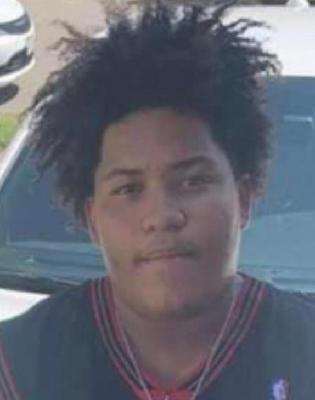
Trent Harper, an 18-year-old Black/African American man from Racine, Wisconsin, was fatally shot during the early morning hours of March 10, 2026, near his home on the city’s north side. Police were called shortly after 1 a.m. to the area of Republic Avenue and 32nd Street, with other reporting placing the scene in the 3200 block of Republic Avenue. Officers found Harper suffering from a gunshot wound to the abdomen.
Emergency efforts were made to save him, and he was taken to a hospital, but he died from his injuries.
The violence unfolded frighteningly close to Harper’s family. His mother, LaToya James, later said she heard the gunshot and then heard her son cry out for her. She rushed to him after he was wounded and remained with him as the emergency response unfolded. In the aftermath, relatives described Harper as a happy, humorous young person who was deeply loved by his family. He had graduated from Horlick High School with the Class of 2025 and had played football for the school, including as a member of Horlick’s 2024 playoff team. His obituary also described his love of sports, his involvement with Changing Lives Ministries and the close relationships he maintained with relatives and friends.
What initially appeared to be a shooting with few publicly known answers developed into a much more specific investigation over the following two months. According to reporting based on the criminal complaint, Demontae Collins and Vonta Rockette went to Harper’s residence in the middle of the night for what had been arranged as a trade involving firearms. Instead of the planned exchange ending peacefully, gunfire erupted and Harper was killed. Publicly available reporting does not clearly establish which person allegedly fired the shot that struck Harper, and the suspects should be considered accused rather than guilty unless proven so in court.
Detectives built their case using several forms of electronic and physical investigative evidence. The criminal complaint was reported to describe surveillance-camera footage, a social-media video considered incriminating by investigators, automated Flock camera information and GPS data from cellular phones. Those pieces of evidence were used to reconstruct movements surrounding the shooting and connect the people investigators believed were involved. Police characterized the killing as an isolated incident rather than a random continuing threat to the community.
On May 13, after approximately two months of investigation, Racine police announced the arrests of Demontae Collins and Vonta Rockette in connection with Harper’s homicide. Both were Racine teenagers at the time of the investigation. Police said the arrests resulted from the continuing homicide investigation and emphasized their effort to obtain justice for Harper and his family.
The available online reporting located for the case confirms the arrests and describes the criminal complaint’s allegation that the shooting grew out of the planned firearm trade, but it does not clearly identify the precise criminal counts ultimately filed against each defendant or report a completed trial or conviction. The investigation was still being described as active in reporting after the arrests, leaving the court process and ultimate determination of responsibility unresolved in the publicly available sources reviewed.