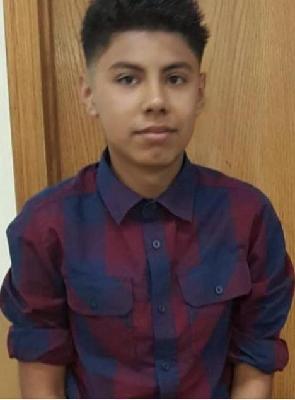
Christian Davis, a 47-year-old man from Kenosha, was killed on the evening of November 21, 2025, during what police described as a targeted shooting on the city’s north side. At approximately 6:36 p.m., officers were dispatched to the 3300 block of 24th Avenue after residents reported hearing gunfire near the intersection of 24th Avenue and 34th Street.
When officers reached the property, they found a Dodge Durango running in the driveway and Davis lying face down on the concrete near the rear entrance of the residence.
Davis had suffered a gunshot wound to his back. Officers immediately began lifesaving efforts after finding that he had no pulse and was exhibiting agonal breathing. Kenosha Fire Department personnel soon took over, but the efforts could not save him. He was pronounced dead at the scene by the Kenosha County Medical Examiner’s Office. Two other people were near the sport utility vehicle when police arrived, but Davis was the only person struck by the gunfire.
Investigators determined that Davis and two companions had walked out of the home and were heading toward the Durango when the attack began. One of the men was preparing to enter the driver’s seat when the shooter allegedly opened fire on all three of them. Surveillance footage reportedly showed the gunman crouching near the front of the vehicle before firing as the group approached. Multiple bullets struck the Durango, indicating that the attacker had fired repeatedly even though only one round hit Davis.
The shooter fled from the neighborhood in a white Jeep with distinctive bluish headlights. A nearby witness reported hearing several gunshots followed by the sound of a vehicle quickly leaving the area. Detectives later learned that the Jeep had been reported stolen in Waukegan, Illinois, more than two months before the homicide. Additional surveillance recordings allowed investigators to trace the vehicle to an apartment-complex parking lot on Birch Road, where it was recovered and processed as evidence.
The investigation eventually focused on Kamryn Gregory Harris of Zion, Illinois. According to the criminal allegations, video showed Harris getting out of the stolen Jeep, and forensic testing found his DNA on its steering wheel. Detectives also examined cellular telephone records that allegedly showed a phone associated with Harris traveling from Illinois into Kenosha before the shooting, remaining in the general vicinity of the crime scene and then moving toward the location where the Jeep was abandoned.
Court documents also connected the investigation to Marvelo Wilson, another individual who had reportedly been seen using the stolen Jeep before Davis was killed. After Wilson was arrested in an unrelated matter, investigators reviewed his cellular records and allegedly discovered that Harris had sent him a location pin shortly after the shooting. Authorities have not publicly accused Wilson of participating in Davis’s killing, and the precise significance of that communication has not been fully explained in public reports. Police have continued to characterize the attack as targeted but have not publicly disclosed a motive.
After an investigation lasting nearly four months, Harris was arrested in Illinois on March 6, 2026, with assistance from Illinois law-enforcement agencies and the United States Marshals Service. He waived extradition and was transported to Kenosha County on March 9. Prosecutors charged him with first-degree intentional homicide in Davis’s death, attempted first-degree intentional homicide for allegedly firing at another member of the group, first-degree recklessly endangering safety and possession of a firearm by a felon.
Harris made an initial appearance in Kenosha County Circuit Court on March 11, when a commissioner set his cash bond at $2 million. Fond du Lac County District Attorney Eric Toney was appointed as a special prosecutor because the Kenosha County District Attorney’s Office identified a conflict of interest. Harris remains accused rather than convicted, and the publicly available reports reviewed did not identify a completed trial, guilty plea, conviction or sentence in the case. The charges leave the circumstances of Davis’s death in the hands of the court, where prosecutors must prove their allegations beyond a reasonable doubt.