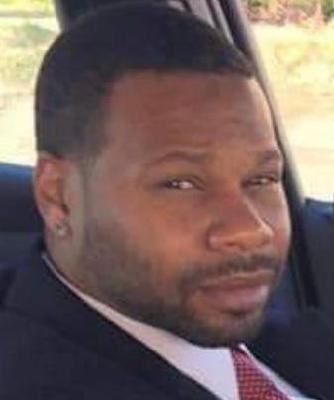
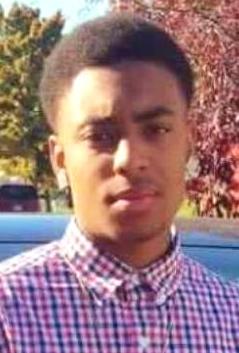
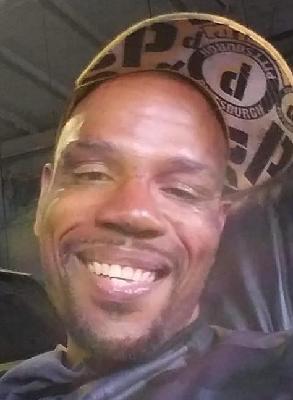
Malicai Calder, a 27-year-old male from Toledo, Ohio, was first reported missing on the night of Saturday, November 22, 2025, after loved ones became alarmed that they had not heard from him for several days. According to police, his last known sighting was on November 15 in the 1400 block of Secor Road, an area that includes an off-campus apartment complex near the University of Toledo where he lived.
Family members and friends described his disappearance as deeply out of character, noting that he was normally dependable and responsive, which intensified concerns as time passed without contact.
In the days after he was reported missing, Toledo police conducted welfare checks and traced his movements, including a visit to his apartment where officers reportedly found the shower running, the television on, and his dog barking inside, but no sign of him and indications that his vehicle was gone. Investigators began focusing on locating his work vehicle, which was believed to be connected to his last known activities. The case took a horrific turn on Tuesday, November 25, when officers spotted the vehicle being driven in the area of Mulberry Street and conducted a traffic stop. The driver was identified not as Calder, but as a man in his early 30s, later named as Martel Huggins. Inside the vehicle, officers discovered dismembered human remains that were subsequently identified as Calder’s.
Court documents and later reporting indicate that Calder suffered both gunshot and stab wounds to the head, and his body had been dismembered. The Lucas County Coroner’s Office performed an autopsy on November 26, 2025, on what it described as Calder’s “dismembered remains.” While the autopsy allowed the coroner to rule the manner of death as homicide, officials stated that the precise cause, time, and date of death remained under investigation at that time. Separate memorial listings associated with gun-violence tracking groups record him as having been lost to gun violence on November 25, 2025, corresponding with the date his remains were discovered in the vehicle in Toledo.
Police arrested the driver of the vehicle, identified as Martel Huggins of Toledo, at the scene of the traffic stop. Huggins was charged with murder and felonious assault in connection with Calder’s death and booked into the Lucas County Corrections Center. Bond was set at $1 million, and he was scheduled for initial court appearances in the days following his arrest, with additional hearings set into December 2025. Authorities have publicly stated that Calder’s remains were found in the vehicle Huggins was driving and that court records describe the gunshot and stab wounds to Calder’s head as well as the dismemberment. As of the latest reporting, investigators had not released a clear motive or explanation for how Calder and Huggins came into contact, and the broader circumstances leading up to the killing remained under active investigation.
Further background on the suspect has raised questions in the Toledo community. Local reporting has noted that Huggins had previously faced charges related to menacing by stalking and carrying a concealed weapon after a woman reported a disturbing series of encounters in which he allegedly tried to open her door and was later found nearby with a large knife. He ultimately received a probationary sentence in that earlier case. In light of Calder’s killing, the woman publicly expressed fear that Huggins would go on to commit more serious violence, and she has said she had worried that something “crazier” might happen in the future. These prior allegations have intensified scrutiny of how the earlier case was resolved and whether more could have been done to prevent subsequent harm.
While the investigation focuses on reconstructing Calder’s final days and the events that led to his death, friends, family, and community members have been vocal in remembering who he was in life. Those who knew him describe a person who had faced significant hardship as a teenager and young adult, including a period of homelessness when he stayed at a shelter in Monroe, Michigan. A pastor who met him there recalls him as diligent and eager to help, working multiple jobs and pushing himself to build a better future. With support from the church community and scholarships, he went on to attend the University of Toledo, ultimately earning a master’s degree and becoming, in the pastor’s words, a “success story” whose life was often held up as an example of perseverance to other young people facing similar struggles.
Family members have echoed these tributes, describing Calder as bright, generous, and someone who would give his last to help others. Statements shared with local media emphasize his kindness, loyalty, and the deep love he had for those around him, underscoring that his killing has left an irreplaceable void in their lives. Community memorials and online remembrance pages portray a grieving city mourning a promising young person whose trajectory—from homelessness to an advanced degree and a growing career—was abruptly and violently cut short. Public appeals for information remain open, with police encouraging anyone who may know more about his disappearance and death to contact investigators or local Crime Stoppers as they continue to build the case against the accused suspect.